


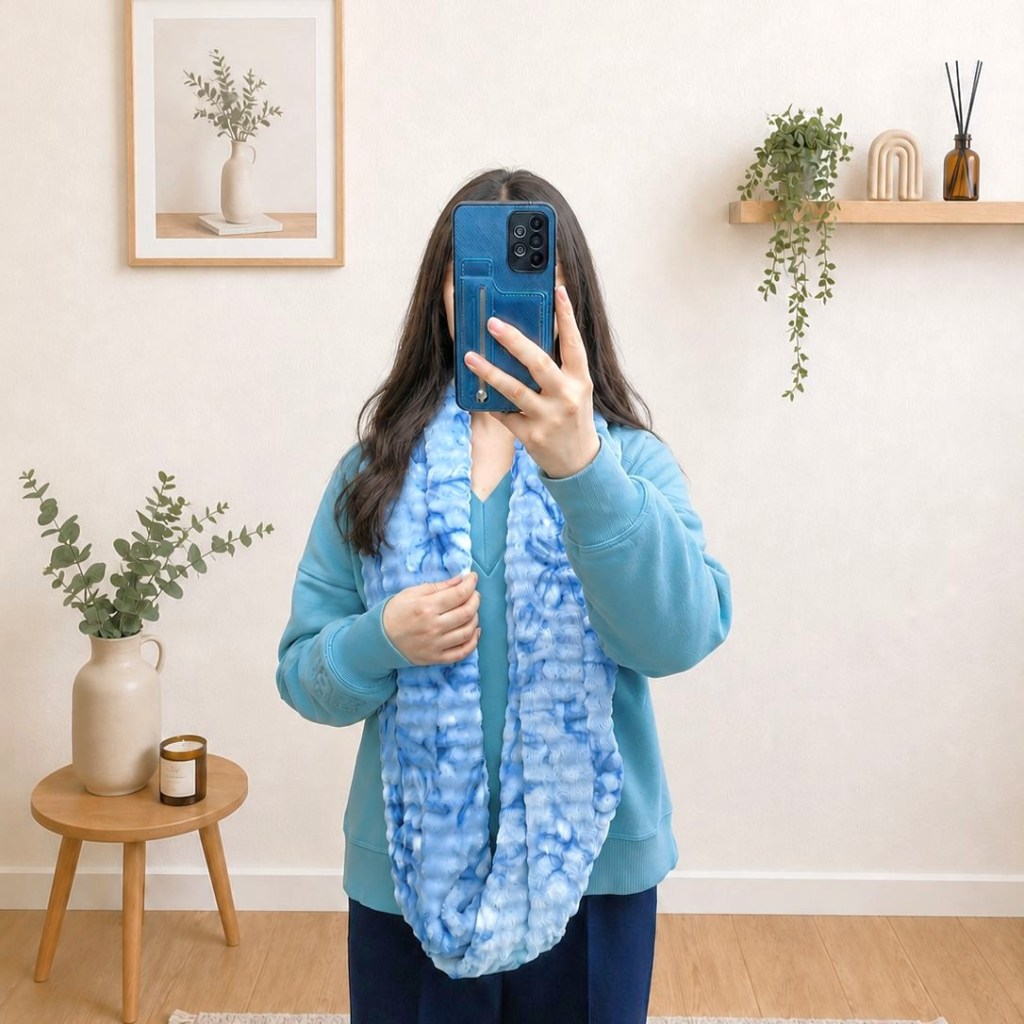
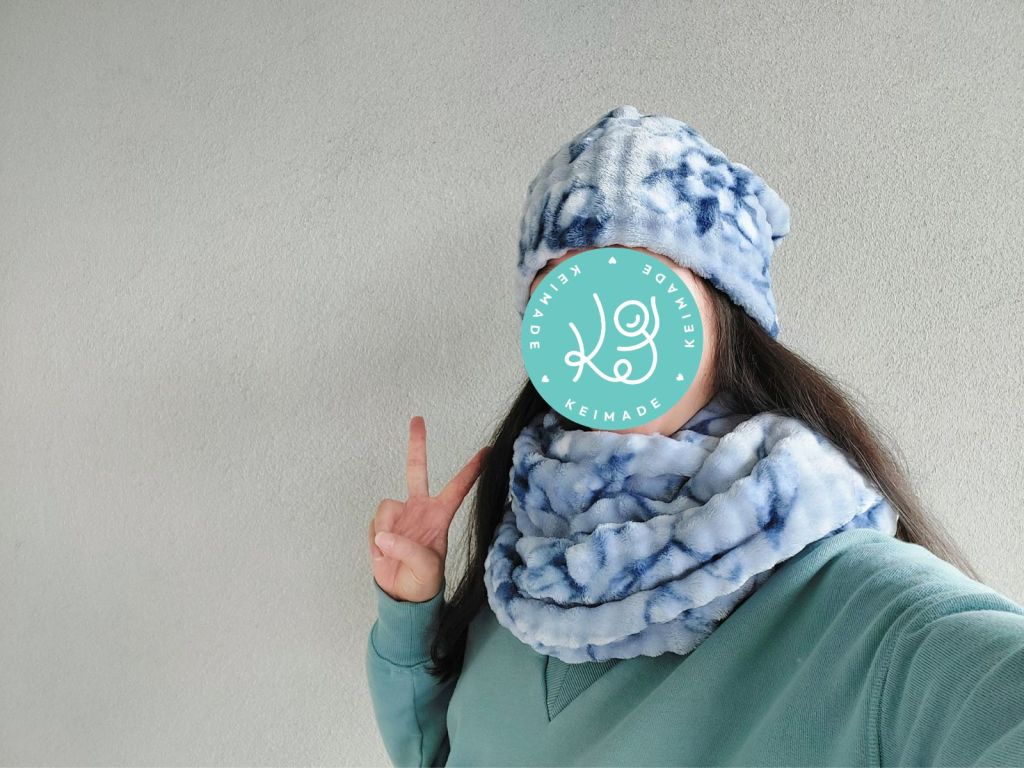
I made this donut snood by upcycling a scarf, then sewed a warmer one from a plush blanket.


Here are the patterns that worked for me (the plush version needed some adjustments to accommodate the bulkier fabric).
Lightweight snood: pattern & steps
I had a full-sized scarf—soft, pretty, but heavy and forever sliding off my shoulders. Instead of letting it sit unused, I turned it into a lightweight, cosy snood.
✂️Pattern
I cut the fabric into a 130cm x 50cm rectangle.
+--------------------------------------+
|                                      |
|             130cm x 50cm             |
|                                      |
+--------------------------------------+
Short enough that the snood hugs my neck when worn, but still long enough that the second loop can be pulled comfortably over my head.
🧵Steps
I referenced tutorials by SweetSmile and DiditSewing, which were basically the same as this short video.
The only difference was my gap was along the long edge rather than the short edge.
- Fold the fabric in half along the long edge, right sides together.
- Sew along that long edge to create a tube, leaving a 10 cm gap unsewn.
- Reach inside the tube, grab the opposite end, and pull it through so the short edges meet, right sides together.
- Align and sew the short edges together in the round.
- Turn it right‑side out by pulling the fabric through the gap.
- Close the gap with a topstitch or invisible hand stitch.
And that’s it—a simple upcycle project that turned an unused oversized scarf into a cosy, easy snood. Now it’s lighter, sits neatly around my neck, and stays put whether it’s doubled up to keep me warm or opened out when I need a little airflow.
Plush snood: pattern adjustments
When I made this again from a thick plush blanket, 130cm wasn’t enough. Because the fabric was thicker, folding it into two layers made the snood too bulky to comfortably pull over my head twice. I ended up extending the length to 155cm and reducing the width to 40cm.
+--------------------------------------+
|                                      |
|             155cm x 40cm             |
|                                      |
+--------------------------------------+
This time, I sewed it like my alternate scrunchie method.



Leave a Reply