


Sharp’s Hotcook is an automatic cooking pot—just place the ingredients inside, select a menu, wait, and open the lid to a cooked meal. The recipes below aren’t in the original recipe books (KNHW10G, KNHW16G, KNHW24G); they’ve been slightly altered for taste or adapted using ingredients that are easy to find in Australia.
オーストラリアで作れるホットクックのアレンジレシピ
Curry
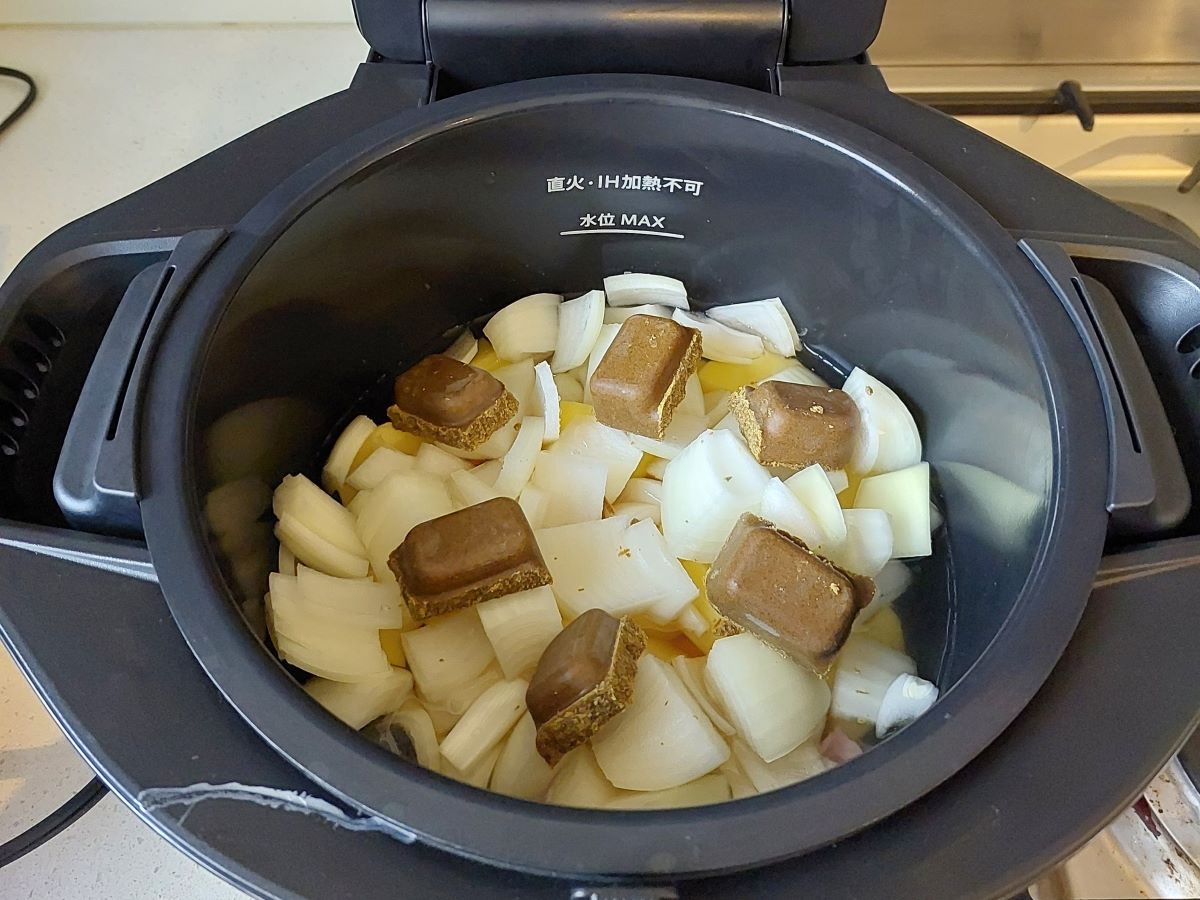
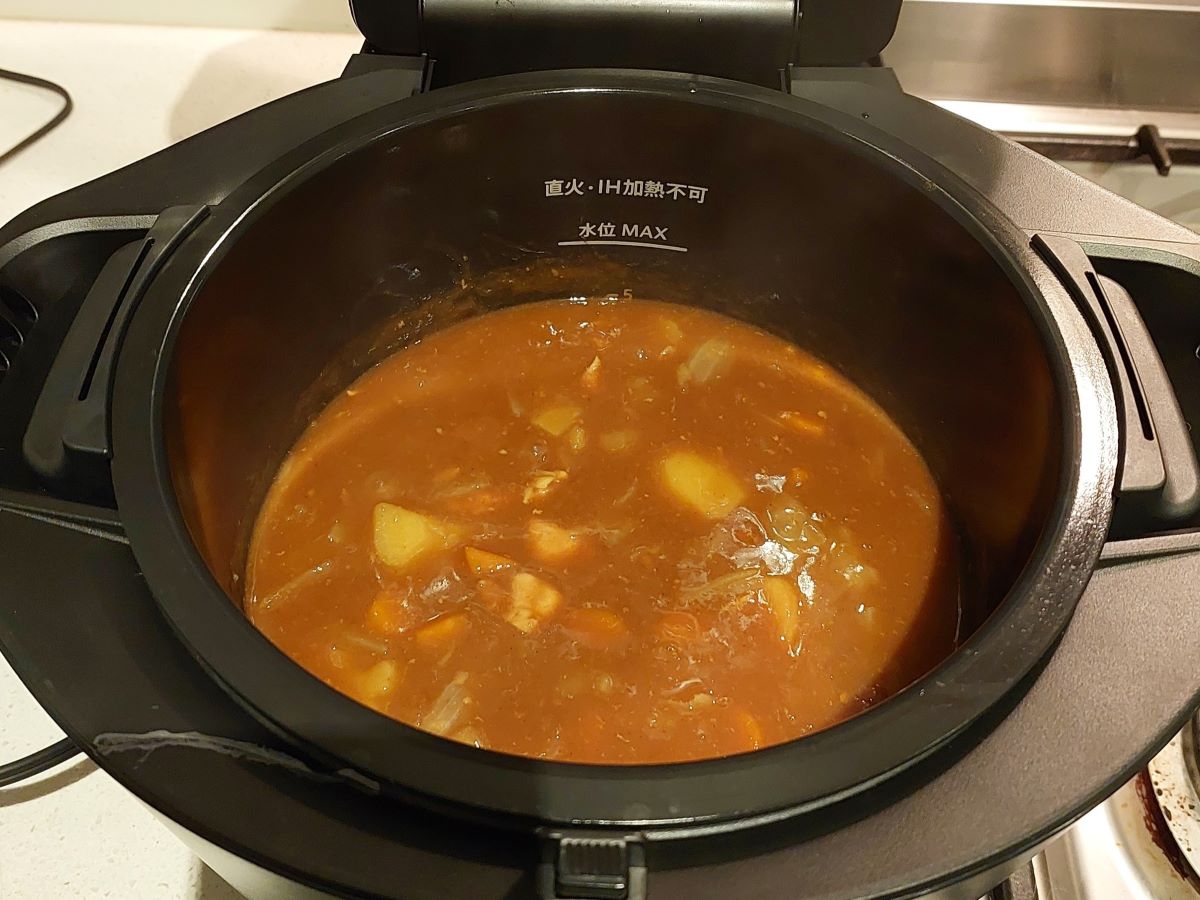
Place in pot in order:
- Chicken thigh fillets – 250g, sliced
- Carrot – 1, sliced small
- Potatoes – 2 or 300g, chopped large into 4-6
- Onions – 2 or 400g, cut small
- Water – 500ml
- Curry roux cubes (hot) – 6 (half packet)
- Honey – a drizzle
Cook with Beef Curry setting (45min).
Tuna Spaghetti

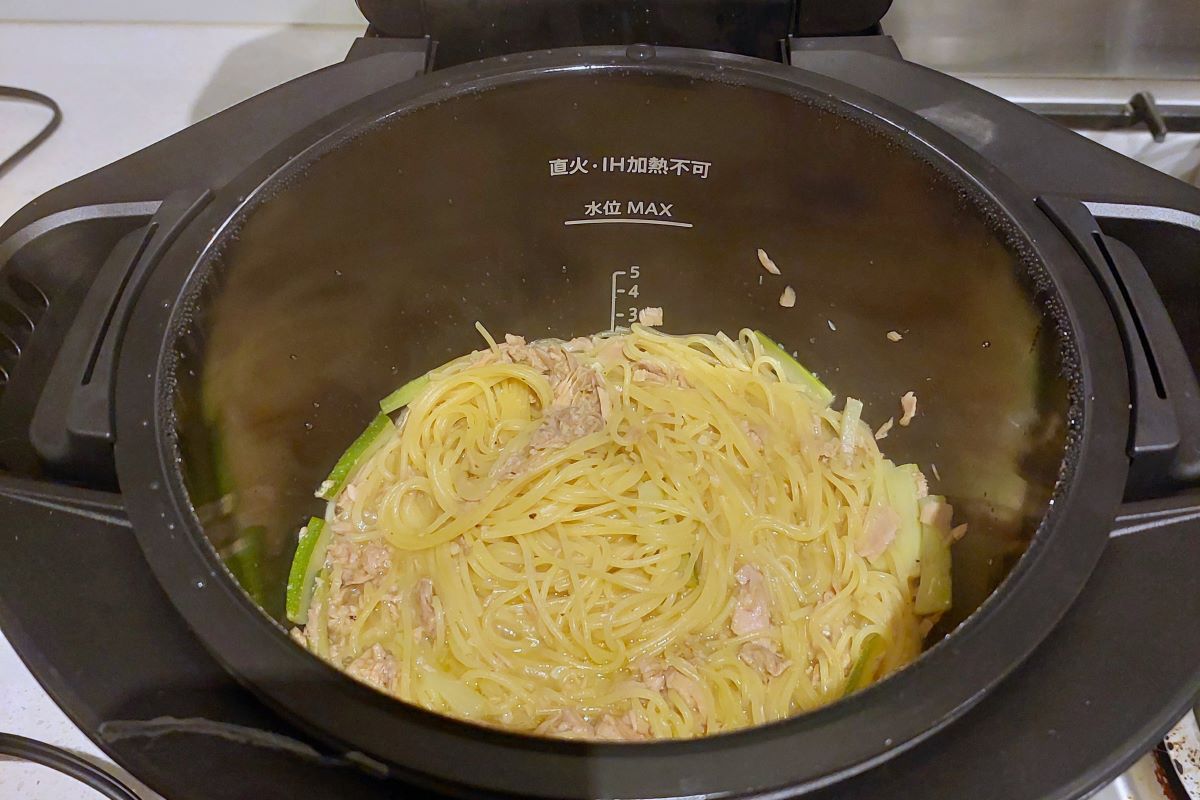
- Tuna in olive oil – 2 cans of 90g, drained
- Salt – 3/4 teaspoon
- Consomme cube – 1
- Pepper
- 5min pasta – 180g, broken in half
- Olive oil – 2tbsp, pour on top of pasta
- Water – 400ml
- (Optional: zucchini or spring onions)
Place everything in pot and cook with Soup Pasta setting.
Mapo Tofu
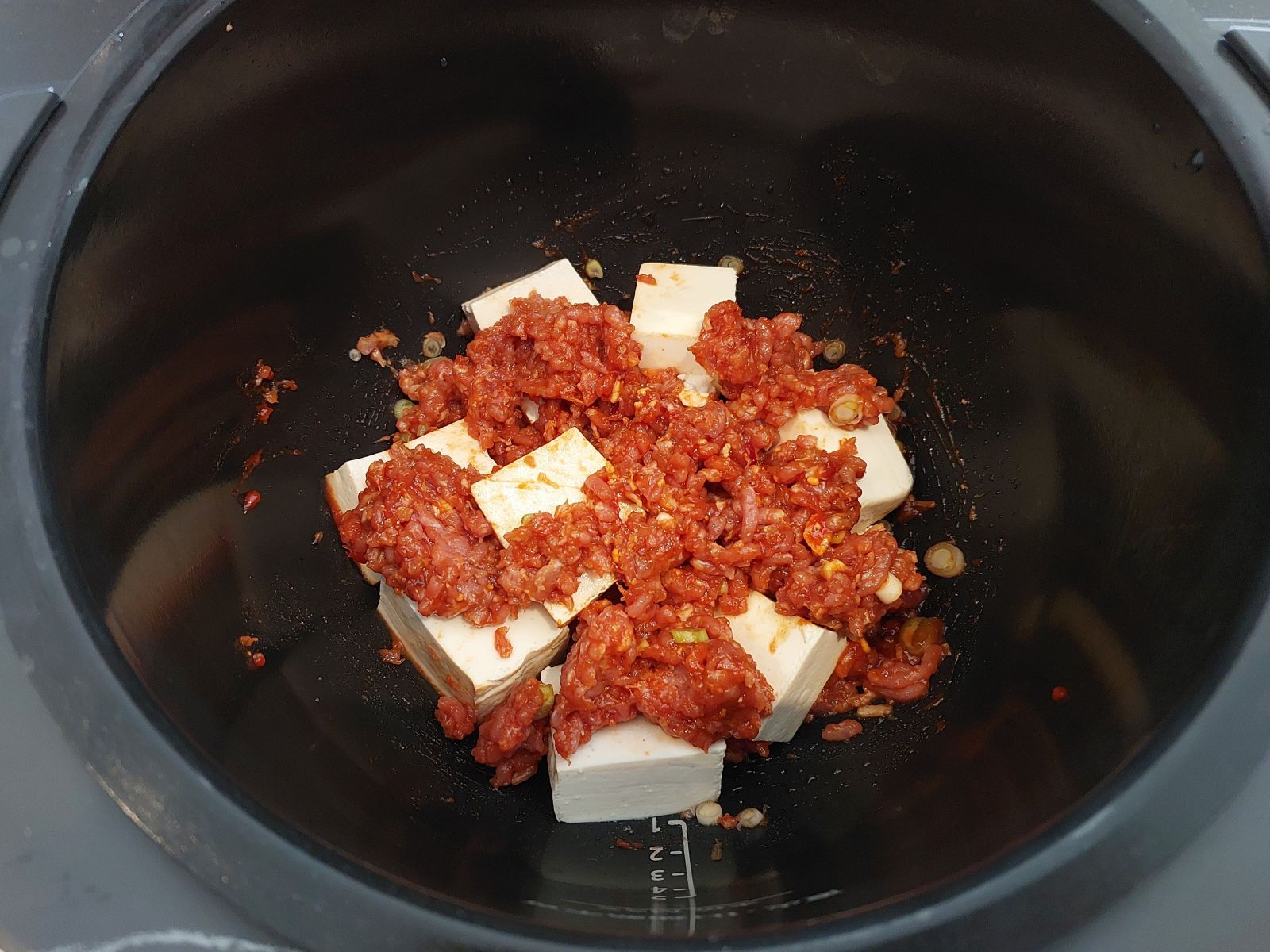

- Minced pork – 250g
- Lite firm tofu – 1 block (300g), quartered
- Kochijan (gochujang) – 2tbsp
- Sugar – 1 tsp
- Tobanjan (doubanjiang) – 1 tsp
- Weipa (or Chinese chicken stock) – 1 tsp
- Sake – 1 tsp
- Soy sauce – 1 tsp
- Oyster sauce – 2 tsp
- Grated ginger – 1 tsp
- Grated garlic (or powder) – 1 tsp
Mix everything except tofu and place on top of tofu. Cook with Mabo Nasu setting (20min).
(Hotcook stalls if cooking 500g mince and 2 tofu blocks.)
Spaghetti Bolognese

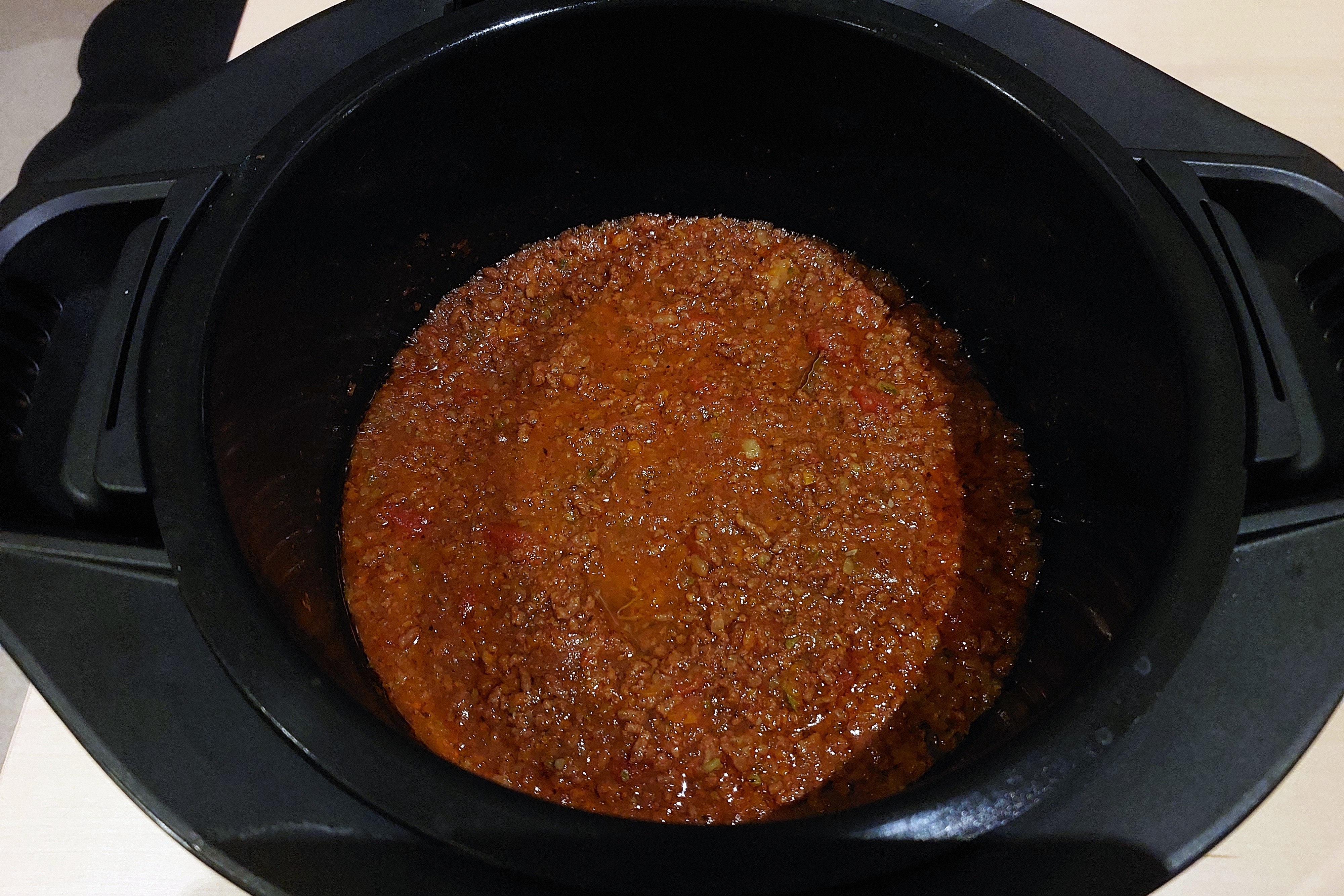
Pop all your usual bolognese ingredients with 500g ground meat. For example:
- Minced beef (lean) – 500g
- Onion – 1, finely chopped
- Carrot – 1, finely chopped
- Zucchini – 1, finely chopped
- Diced tomato in paste (mixed herbs) – 400g can
- Tomato paste – 140g tub
- Red wine stock pot – 1
- Water – 200ml
- Consomme soup stock – 2tsp
- Sugar – 2tsp
- Salt & Pepper
- Wine – 1 shot
- Bay leaves – 2
- Mix everything well in the pot.
- Cook with Meat Sauce setting (30min).
- Store half in pyrex.
- Snap 5min spaghetti in half and spread inside remaining bolognese.
- Cook again with Meat Sauce setting (30min).
If just making the sauce, extend cooking time by 30min after step 2.
Salmon Miso Nabe Soup
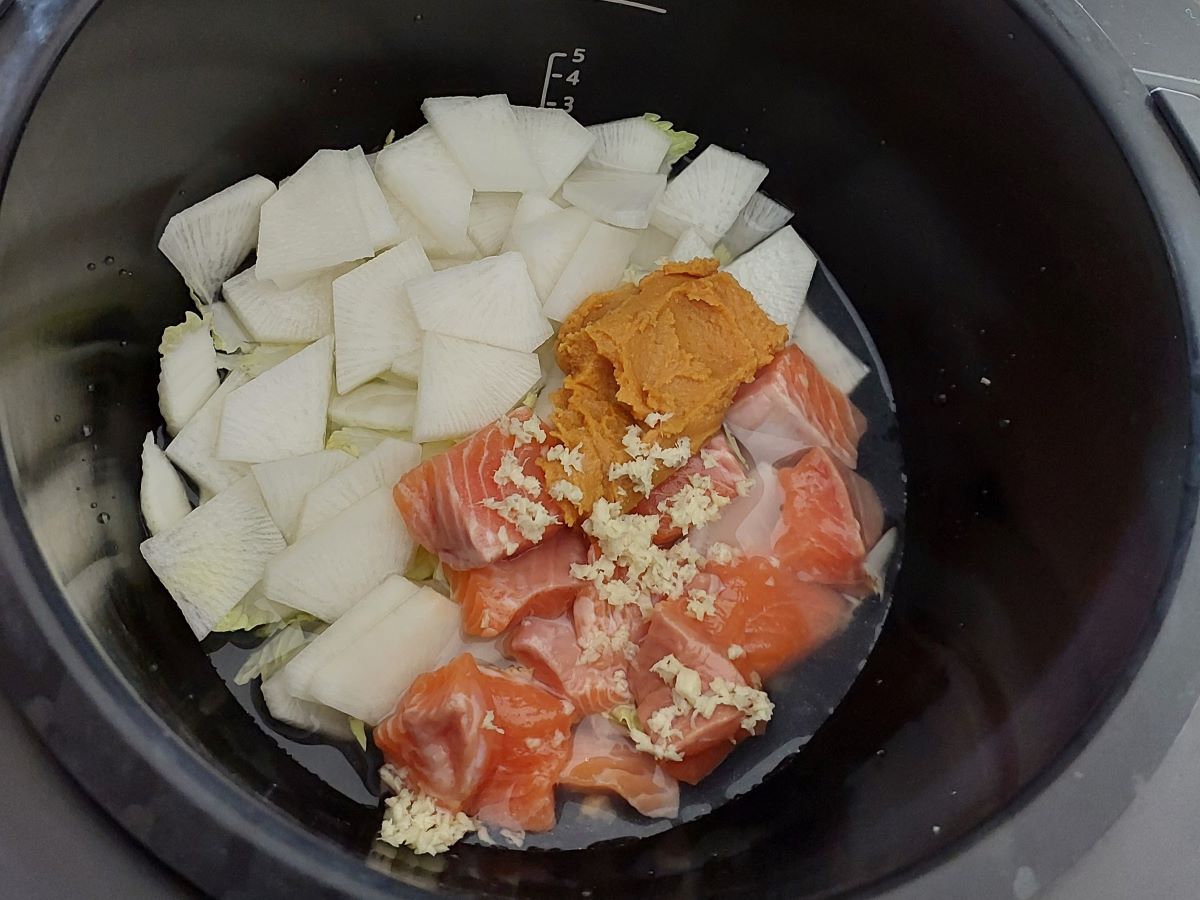

- Salmon pieces – 200g
- Vegetables (hakusai, daikon, etc.) – 300g
- Water – 400ml
- Dashi miso – 2tbsp
- Sake – 1tbsp
- Grated ginger – 2tsp
Place everything in pot and cook with Miso soup setting (25min).
Takikomi Salmon Rice


- Rice – 2 rice cups (180ml x 2)
- Salmon fillets – 2 pieces
- Enoki mushrooms – 1/4 pack or a handful
- Carrot – 1/2
- Ginger, grated – 1 teaspoon
- Salt
- Sake – 1 tablespoon (15ml)
- Soy sauce – 2.5 tablespoons
- Mirin – 2 tablespoons
- Dashi powder – 1/2 teaspoon
- Water – Up to the 2 cup line minus above on the rice cooker.
- Salt the salmon. Wait half an hour if there’s time.
- Wash and drain the rice. Add the broth (sake, soy sauce, mirin, and dashi), then top up with water up until the 2-cup line on the rice cooker bowl.
- Grate carrots and ginger. Chop Enoki into thirds.
- On top of the rice, layer grated carrots, enoki, ginger, and salmon (skin up if there is skin).
- Cook with Steamed Rice setting (50min).
- Break up salmon fillets (remove skin), mix it and serve.
Sake Daikon (Simmered Salmon & Radish)
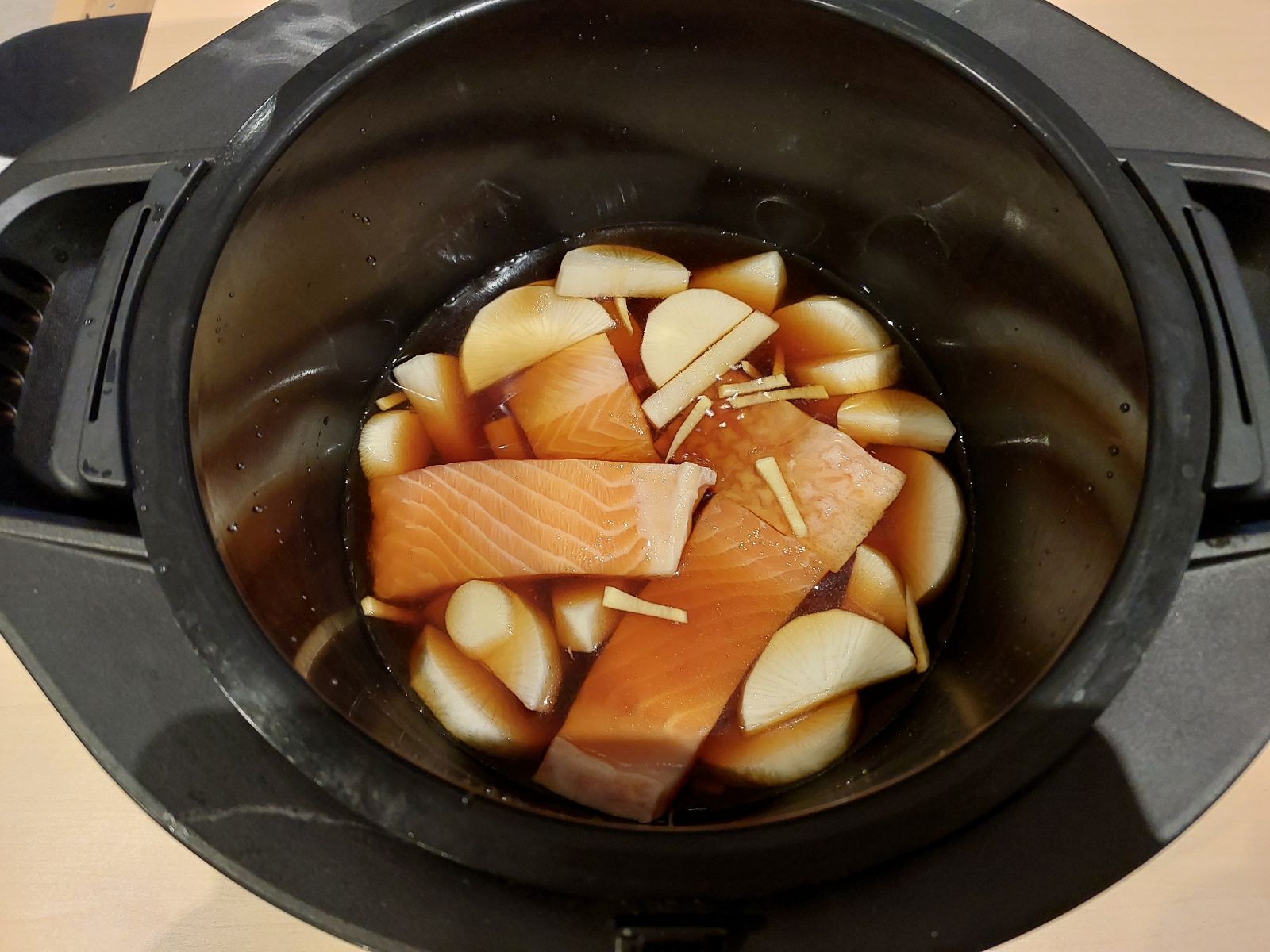
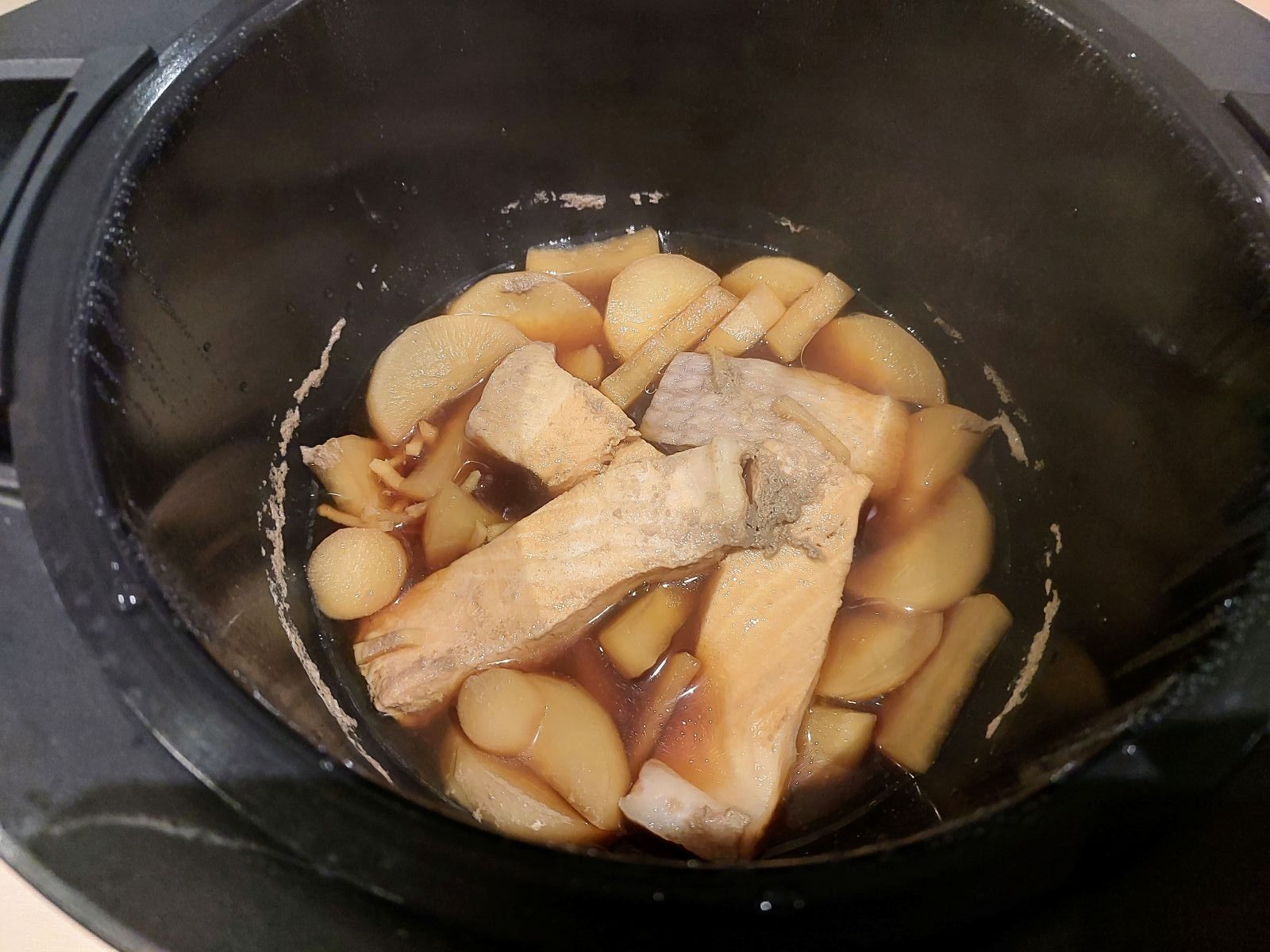
- Salmon fillets, halved – 2 or 350g
- Daikon, sliced – 400g
- Ginger, thin slices – 1 thumb
- Soy sauce – 4tbsp
- Sugar – 3tbsp
- Mirin – 3tbsp
- Sake – 3tbsp
- Water – 300ml
Pop everything in the pot cook with Buri-Daikon setting (40min). Rest for 15mins.
Oyako Don (Chicken & Egg on Rice)
- Chicken thighs, diced – 250
- Onion, sliced – 1
- Eggs – 4
- Dashi water – 4tbsp
- Soy sauce – 2tbsp
- Mirin – 2tbsp
- Sugar – 2tsp
- Pop onions in hotcook, then chicken.
- Pour sauce mix in.
- Cook on manual Nimono (no mixing) for 15min.
- Pour 4 loosely mixed eggs and cook for another 3 mins.
- Cook on Nitsumeru with lid open until desired consistency.
- Scoop onto rice.
Omuretsu filling


- Bolognese mince – 250g
- Onion – 1
- Soy sauce – 2tbsp
- Sugar – 1.5tbsp
- Sake – 2tbsp
- Salt & Pepper
- Pop all ingredients in the hotcook and mix.
- Cook with Dry Curry setting (20min).
- Break down mince with wooden sppon and cook further with manual “nitsumeru (boil down)” setting for 3 mins.
Cook egg as per:

Mushi-Dori (Sous Vide Style Chicken)
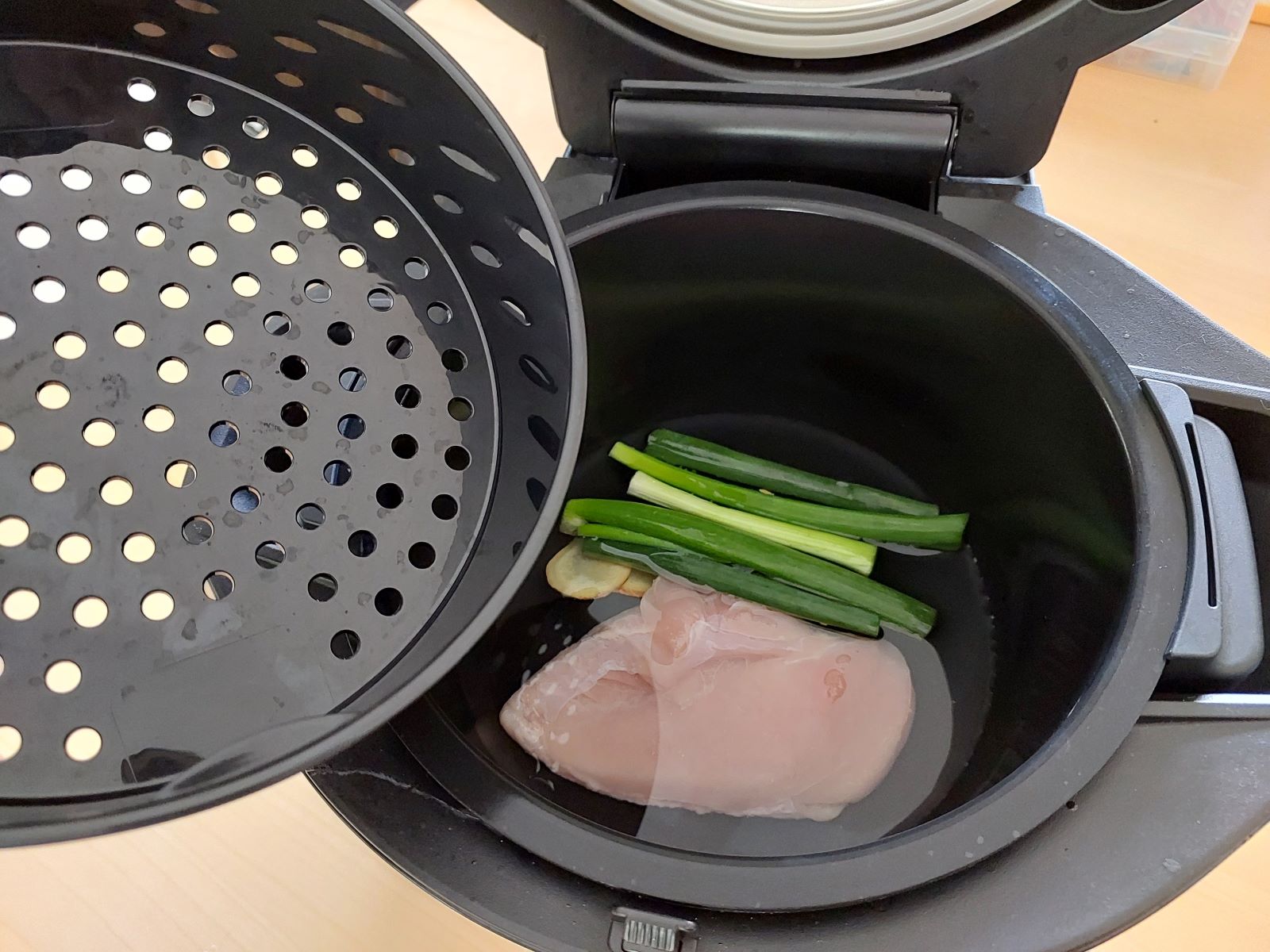
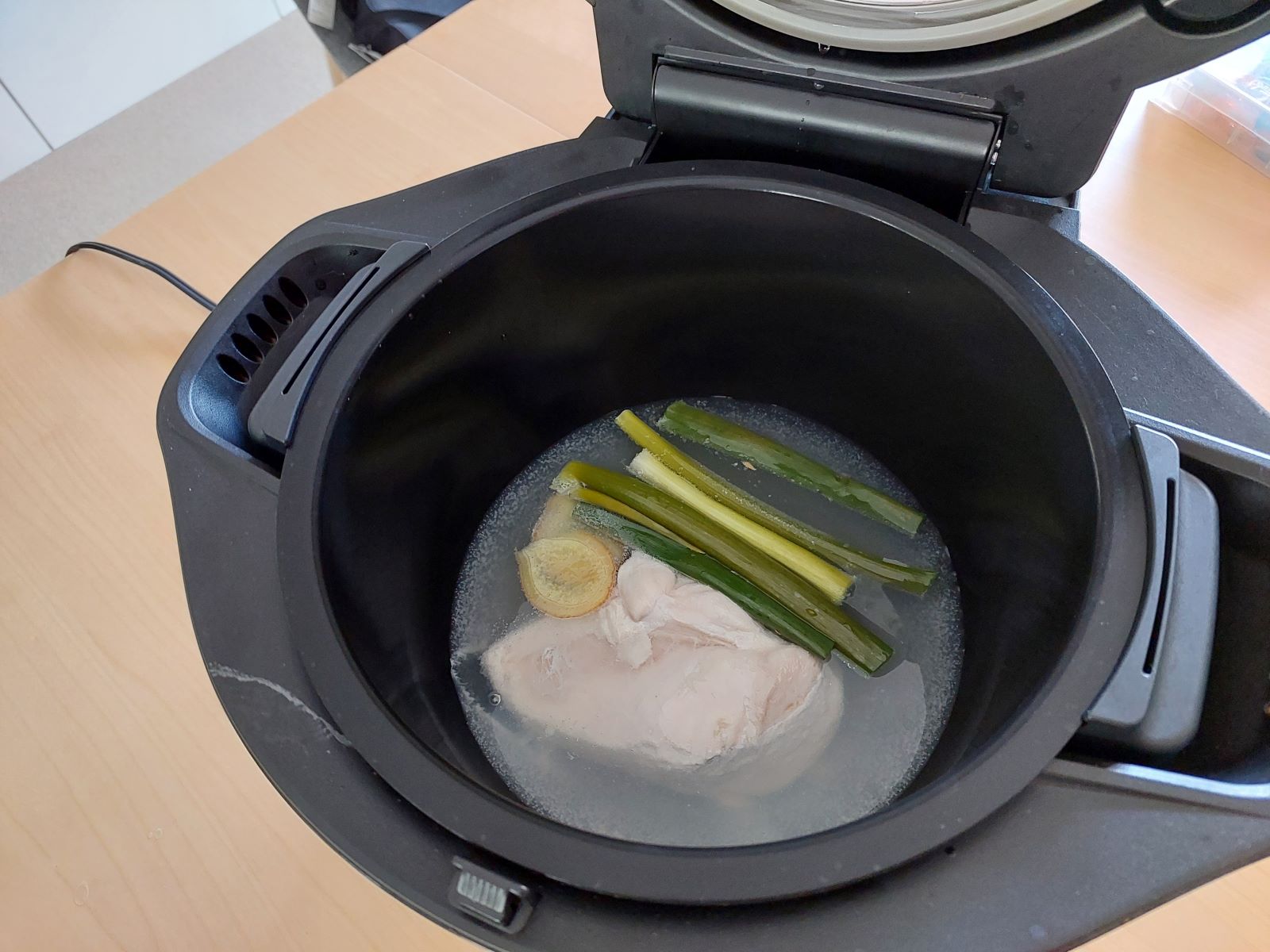
- Chicken breast fillet – 1 (250g)
- Spring onion – 1 (can do without)
- Ginger – 2 slices
- Salt – 0.75tsp
- Water – 500ml
- Rub salt on chicken.
- Pop all ingredients in hotcook and cook with Salad Chicken setting (1h10min).
- Slice and serve chicken with Ponzu or Negi-miso.
- Serve broth as clear soup.

Chicken soup
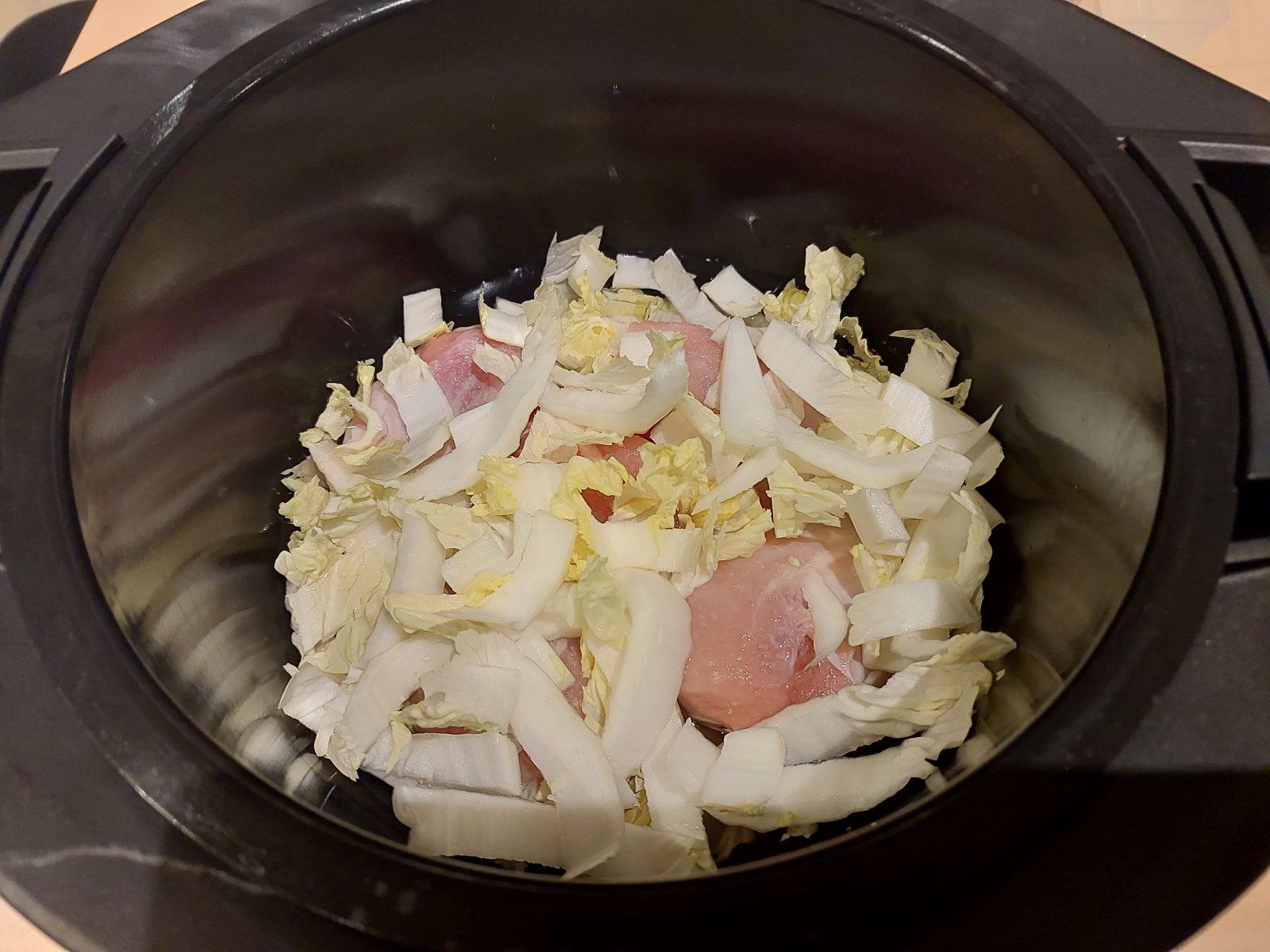
- Coles chicken lovely legs – 1pk (~5 chicken leg fillets with bone)
- Ginger – 5 thin slices
- Salt – 1tsp salt
- Sliced wombok cabbage
- Water – 600ml
- Optional: Weipa – 1tsp
- Put ginger and chicken into pot. Sprinkle salt on the chicken.
- Put all other ingredients in the pot.
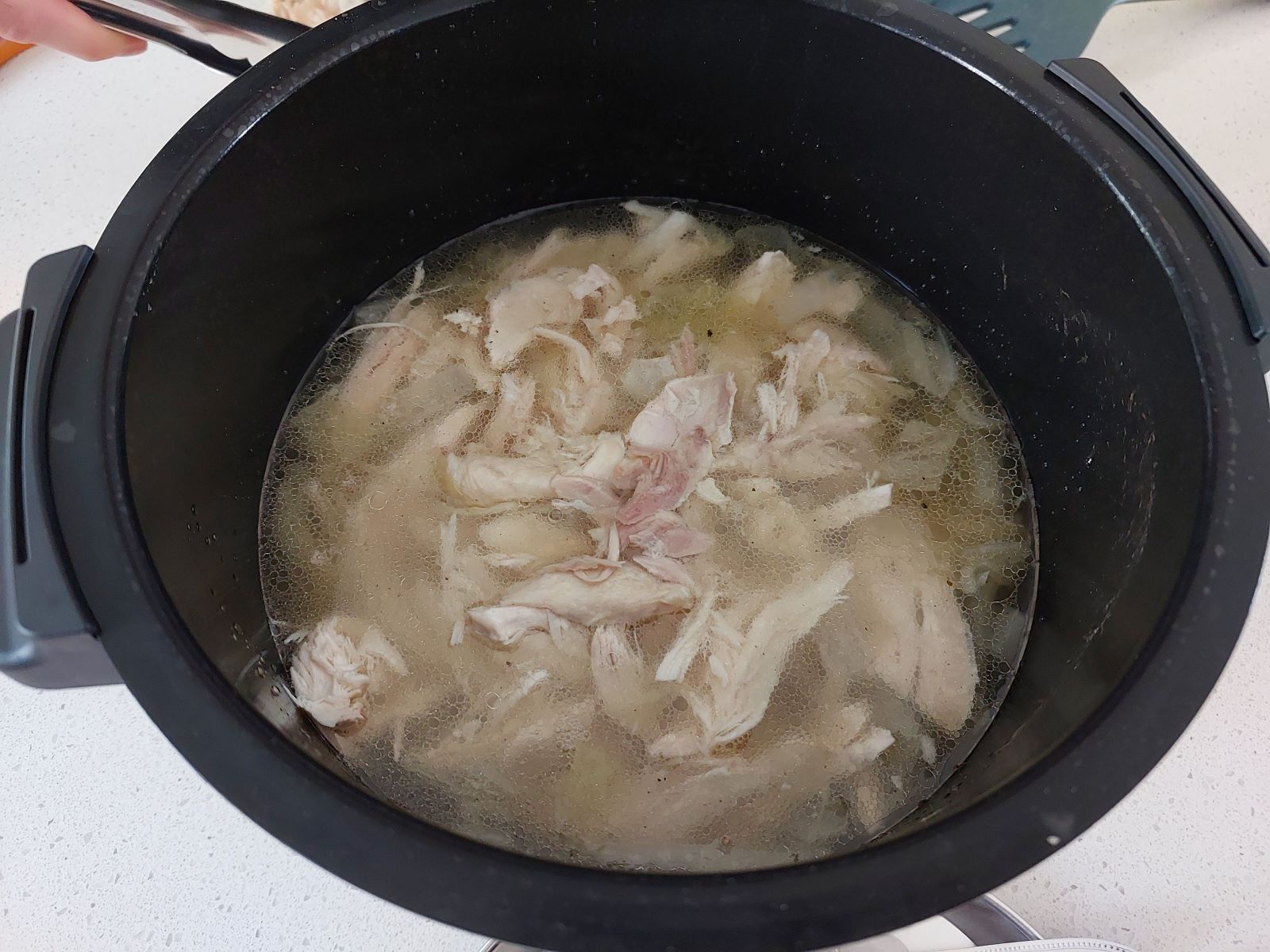
- Cook with Samgye-tang setting (1h50min).
- Shake bones out with tongs before serving.
Spaghetti Napolitana
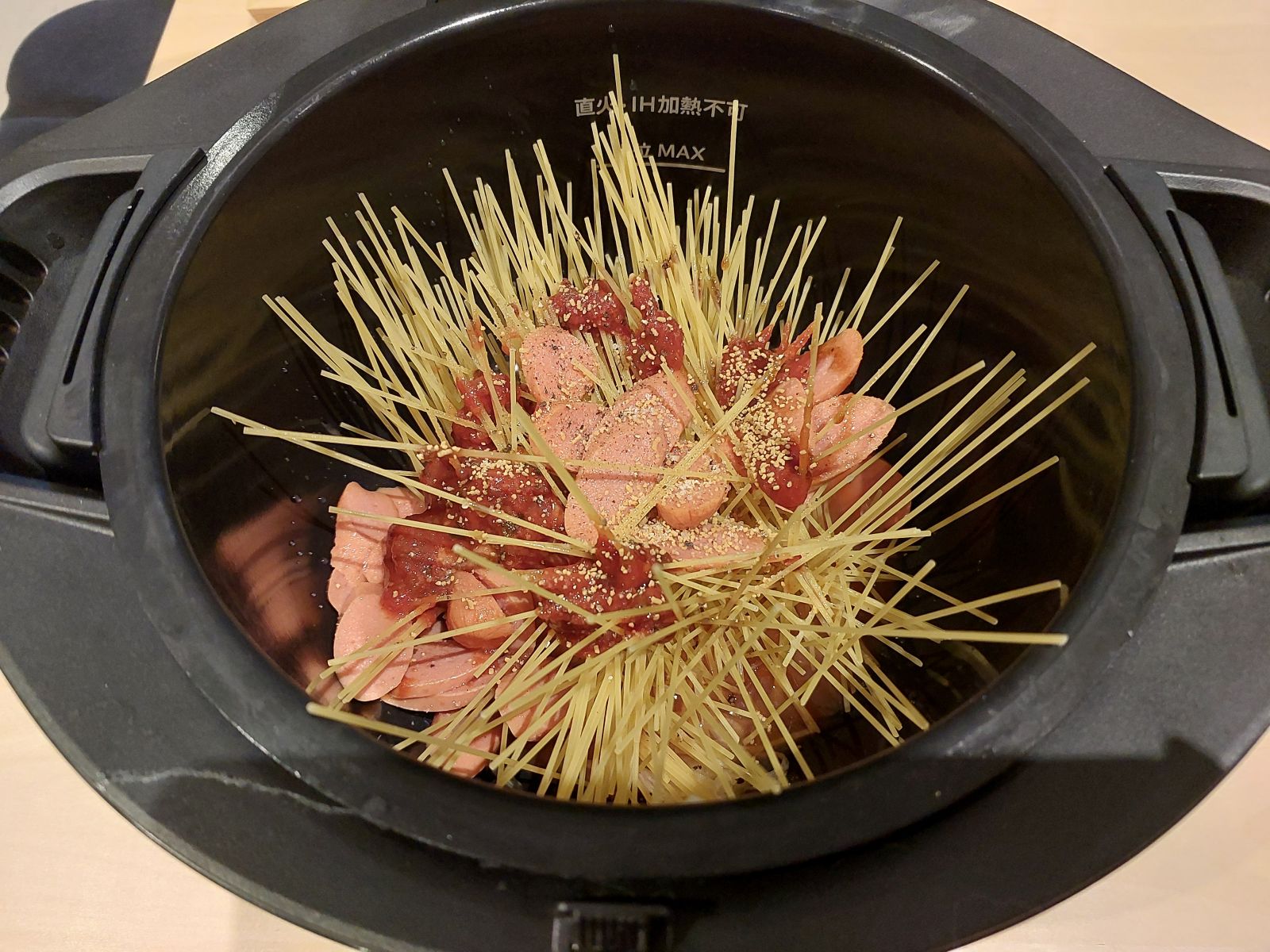
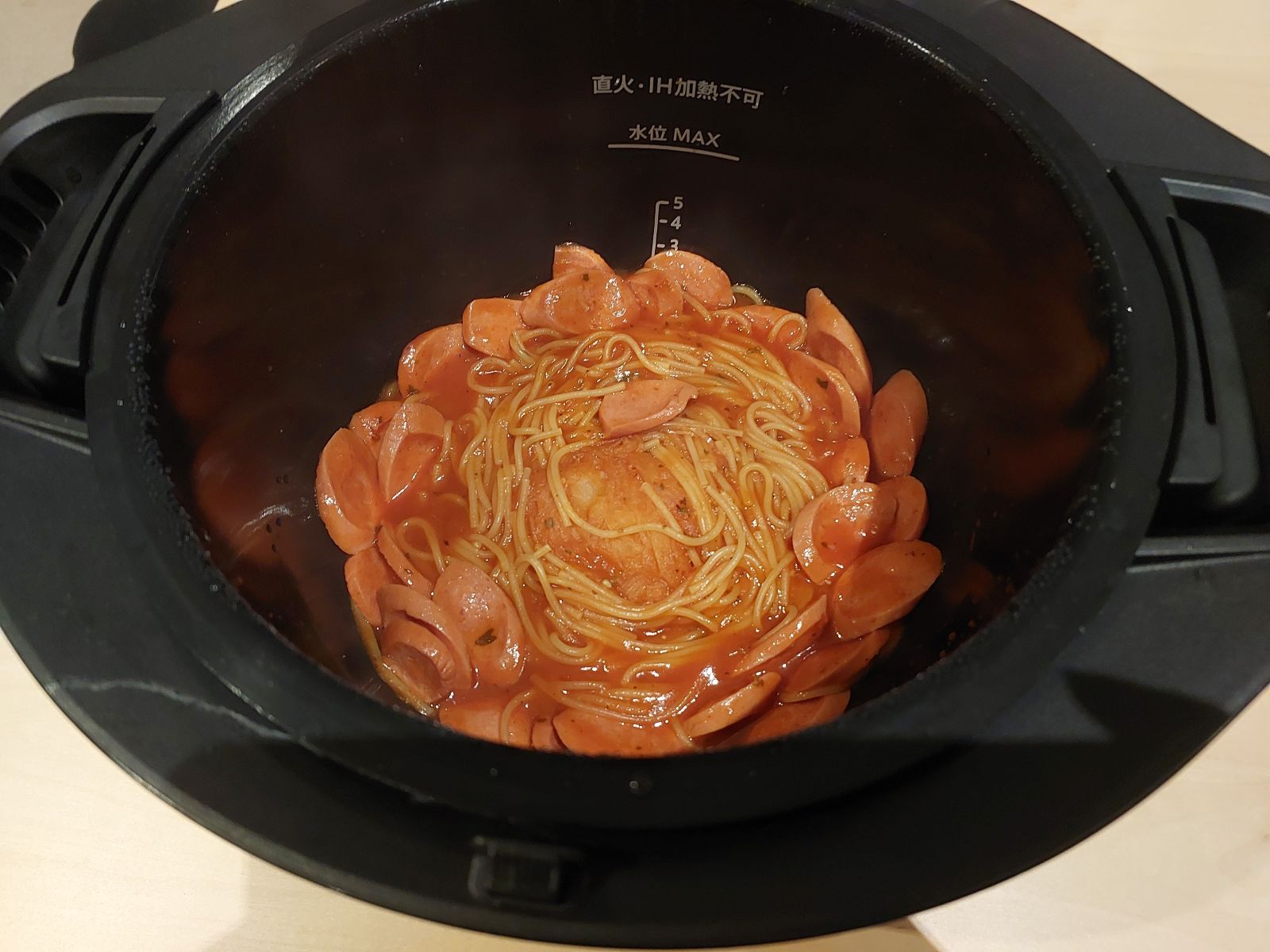
- Tomato paste (pizza sauce) – 100g
- Salt – 0.25tsp
- Pepper
- Onion – half
- Frankfurt sausages – 2
- Comnsomme -0.25tsp
- Water – 300ml
- 5min pasta – 140g
Place everything in pot and cook with Napoli-style pasta setting (25min).
Kakuni (Melty Pork Belly)
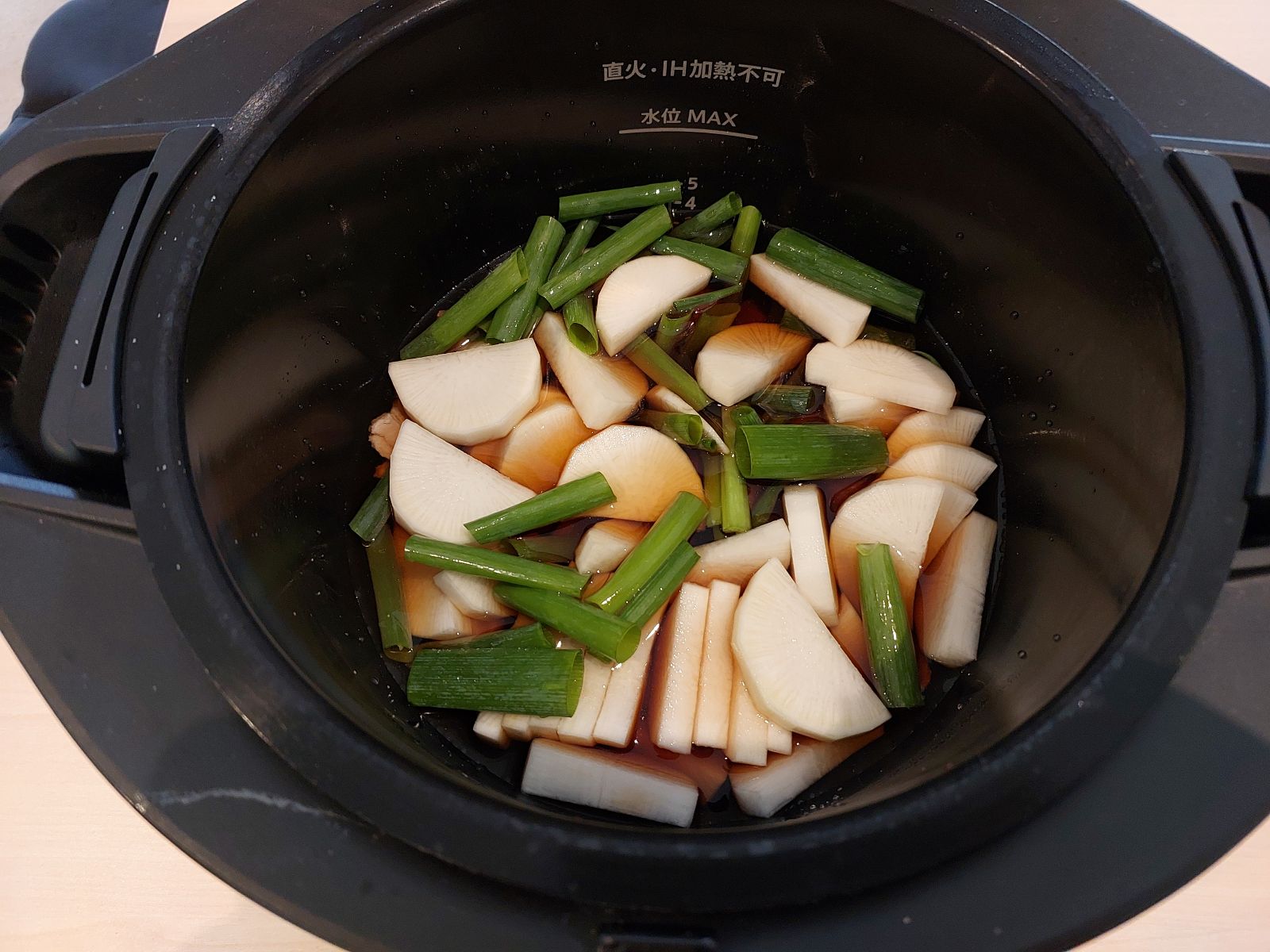
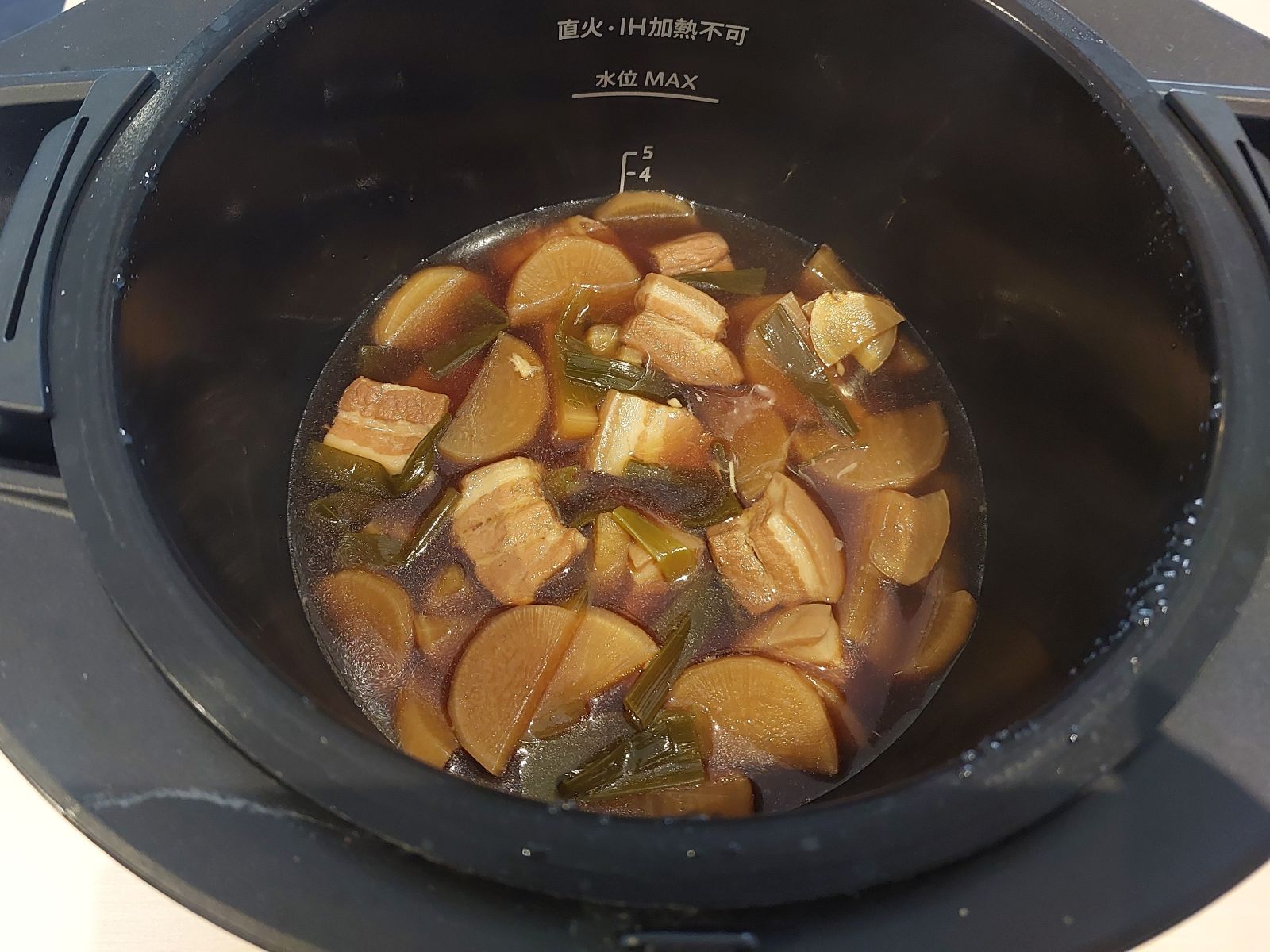
Preparation:
- Pork belly, cubed – 400g
- Ginger – 3 slices
- Spring onion – 1
- Water – 1 litre
- Pop all ingredients above in Hotcook to pre-boil the pork belly.
- Press Manual → Soup → No mixing → 30mins.
- Wash boiled pork and wipe pot.
Cooking:
- Boiled pork belly from above
- Sake – 100ml
- Sugar – 4 Tbsp
- Soy sauce – 5 Tbsp
- Ginger – 4 slices
- Water – 400ml
- Daikon radish, sliced – 300g
- Spring onion, 5cm lengths – 4 shoots
- Pop all ingredients into hotcook pot.
- Cook with Buta-no-kakuni setting (1h 30min)
Tonjiru

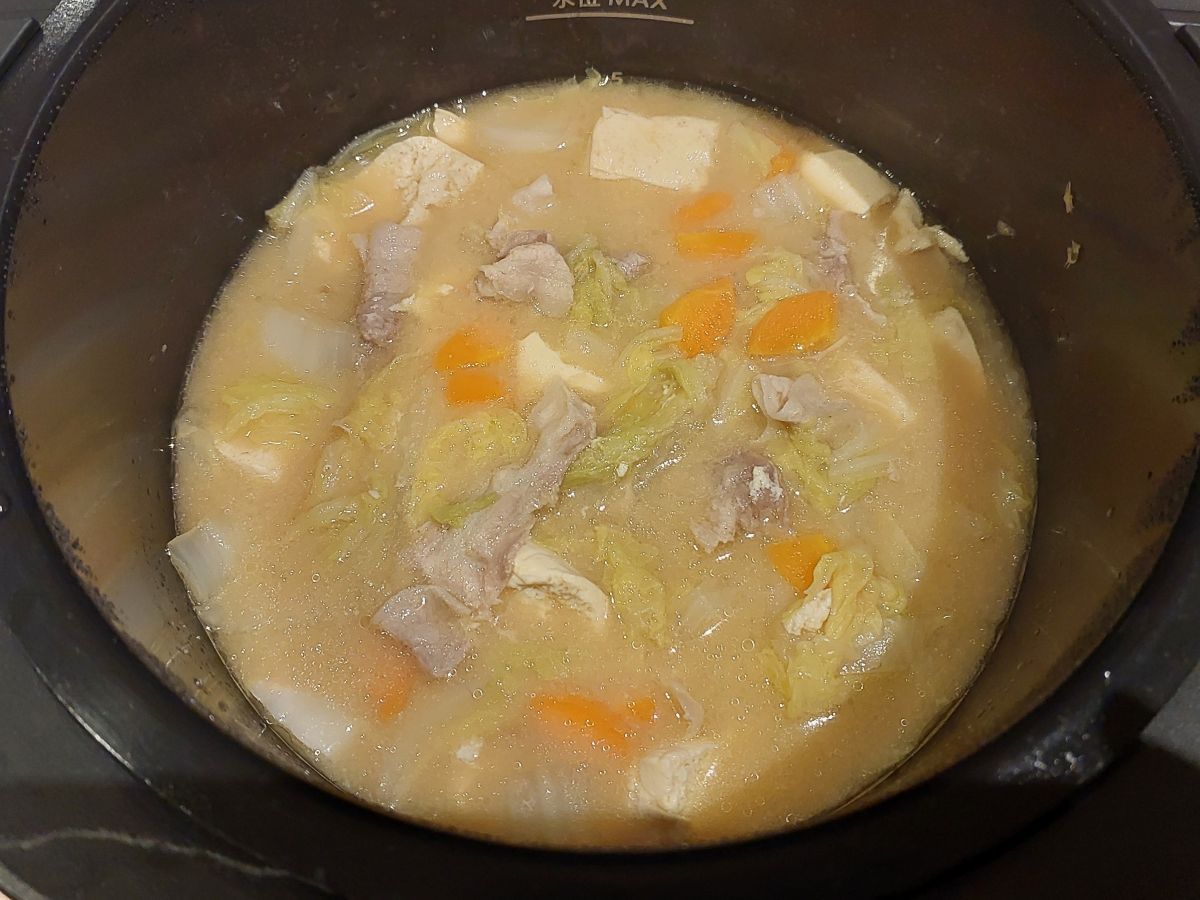
- Pork belly slices – 200g
- Vegetables (Wombok cabbage, carrots, daikon radish) – 200g
- Lite firm tofu – 1pk, 300g
- Miso – 3tbsp
- Dashi – 1tbsp
- Water – 600ml
- Sake – 1.5tbsp
- Grated ginger – 1tbsp
Cook with Miso soup setting (25min).
Namul Bean Shoots
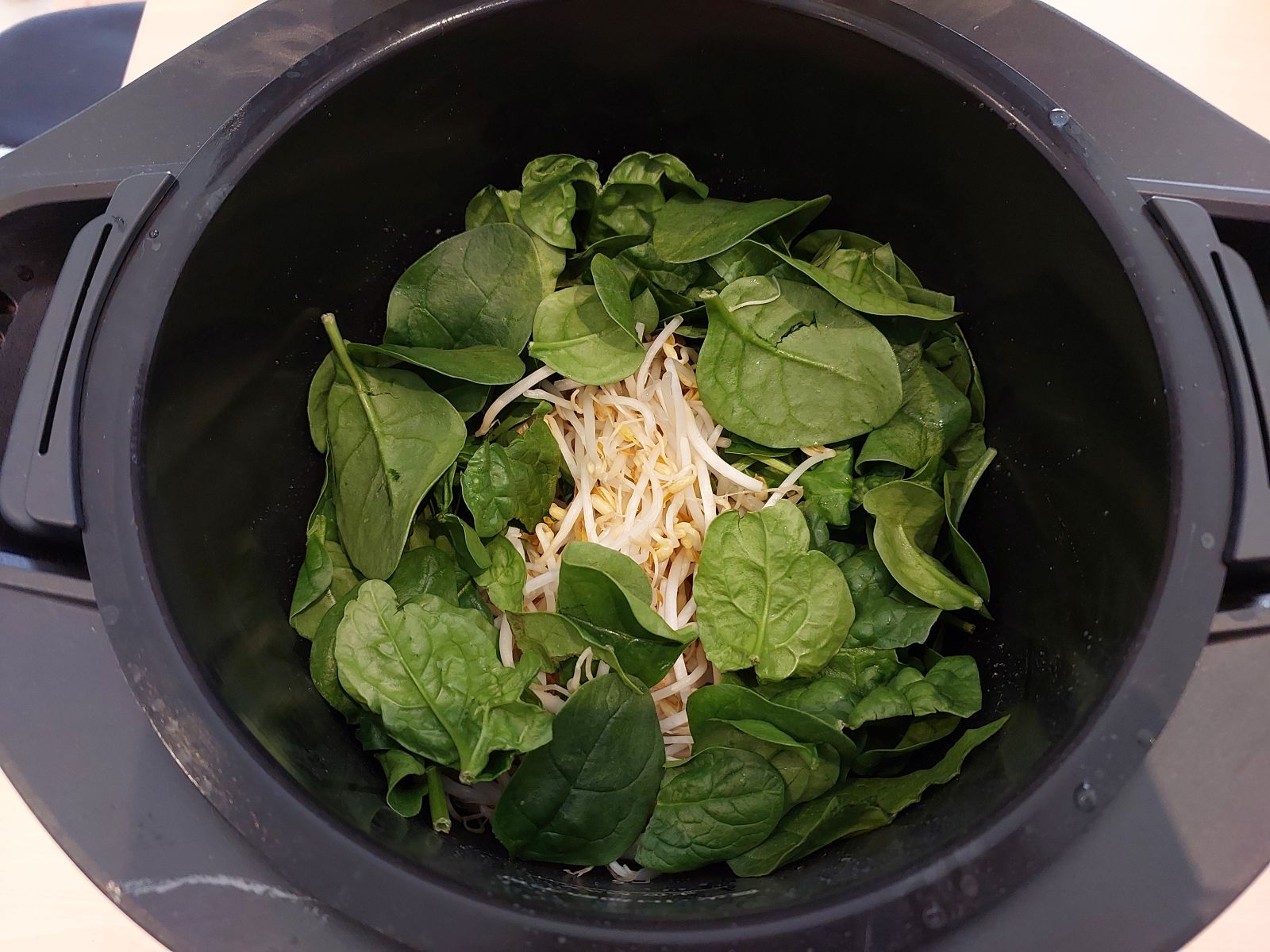

- Bean shoots – 1 bag (250g)
- Weipa or Chinese chicken stock – 1tbsp
- Soy sauce – 2tsp
- Roasted seame seeds, ground – 1tbsp
- Sesame oil – 1tbsp
- Garlic powder – 1tsp
- [Optional] Ajinomoto – 5 shakes
- [Optional] Baby spinach – 2 handfuls
- Wash bean shoots and pop into hotcook.
- Wash spinach and pop into hotcook.
- Add 2 tbsp of water if drained well.
- Cook on Manual > Boil without water > 4min
- Increase 2 mins if needed
- Mix all condiments while hot.
- Cool down and serve.
Chawan-mushi
- Egg – 1
- Shiro-dashi – 25ml
- Water – 150ml
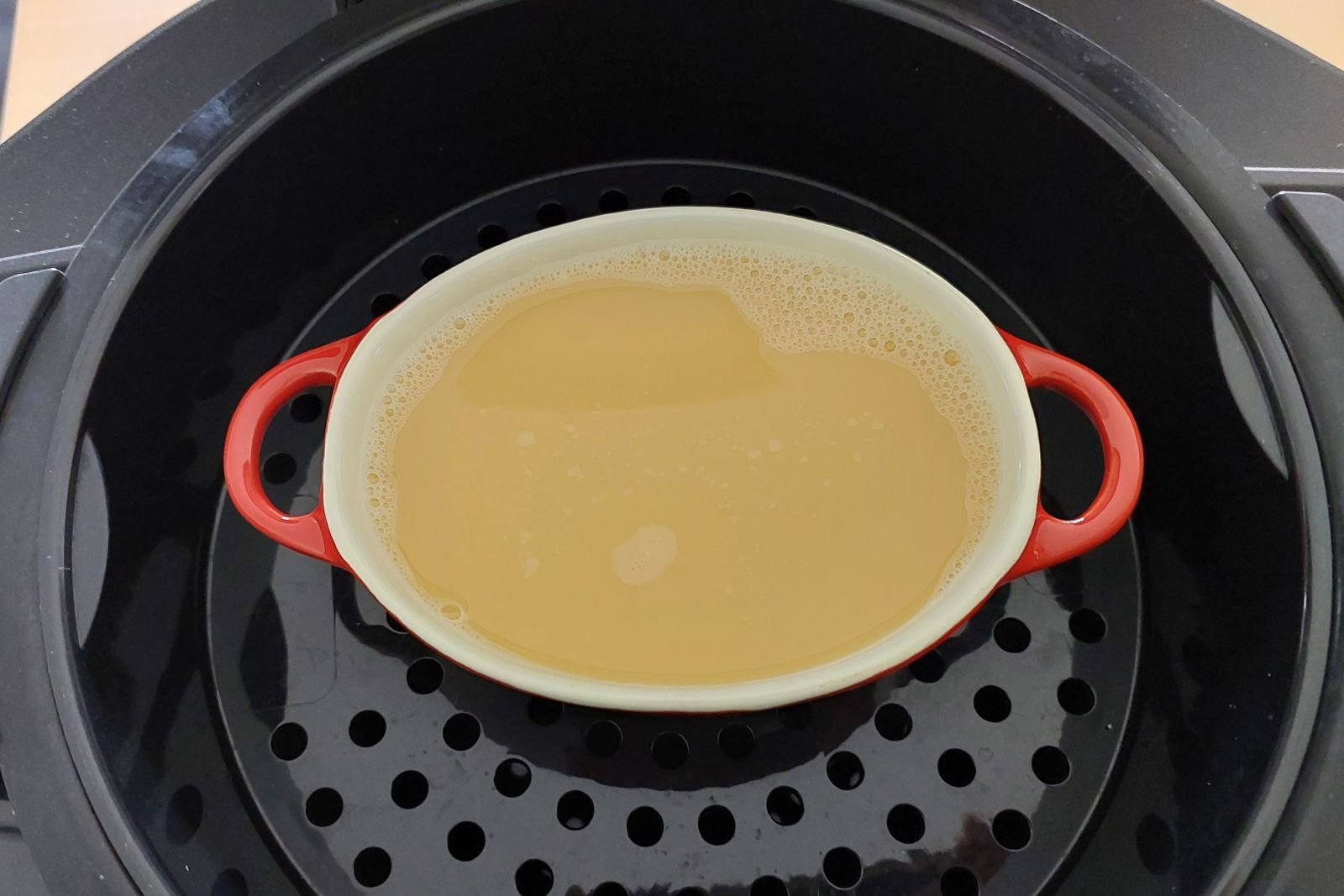
- Whisk egg, and mix all ingredients.
- Use a strainer to fill a short vessel.
- In the hotcook pot, pour 200ml water and pop the steamer basket on.
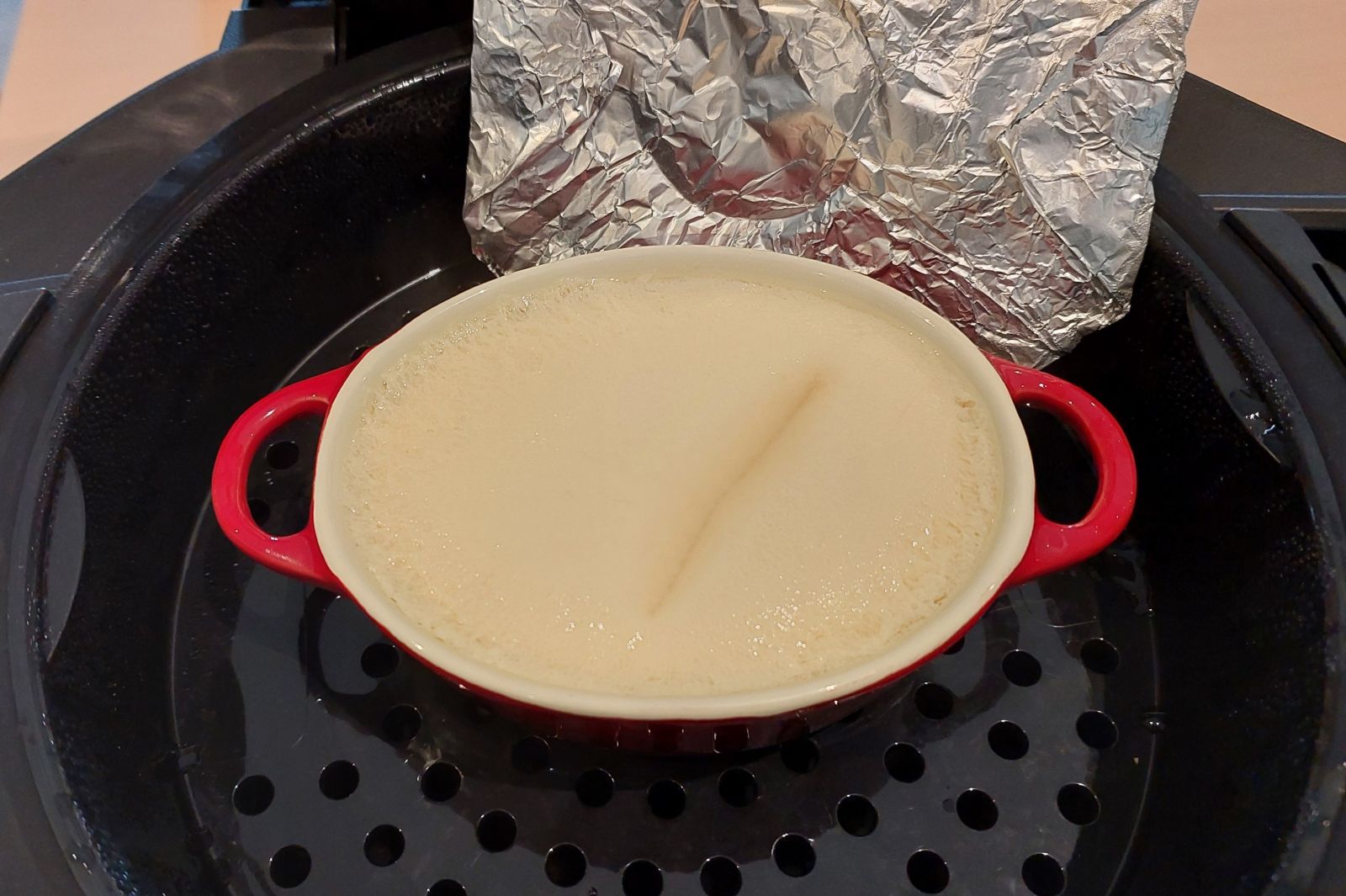
- Place the mixture vessel onto the steamer basket and lay aluminum foil on top to cover it.
- Cook with Manual > Steam > 11 minutes.
Onsen Tamago
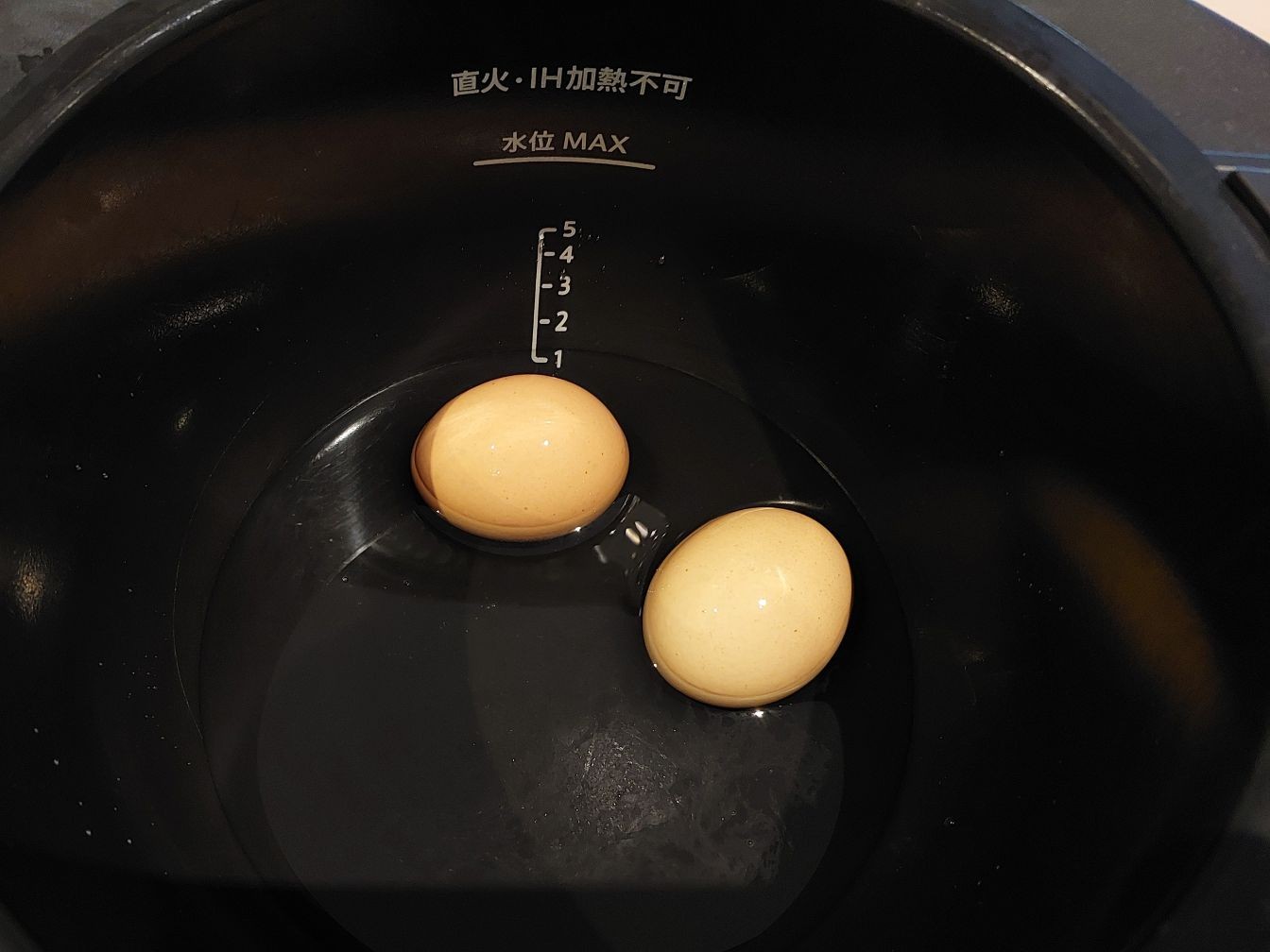

- Eggs – 1 to 5
- Water – filled up to half height of eggs
- Pop eggs into the pot.
- Fill pot with water until eggs are half covered.
- Cook with Onsen Tamago setting (<40min).
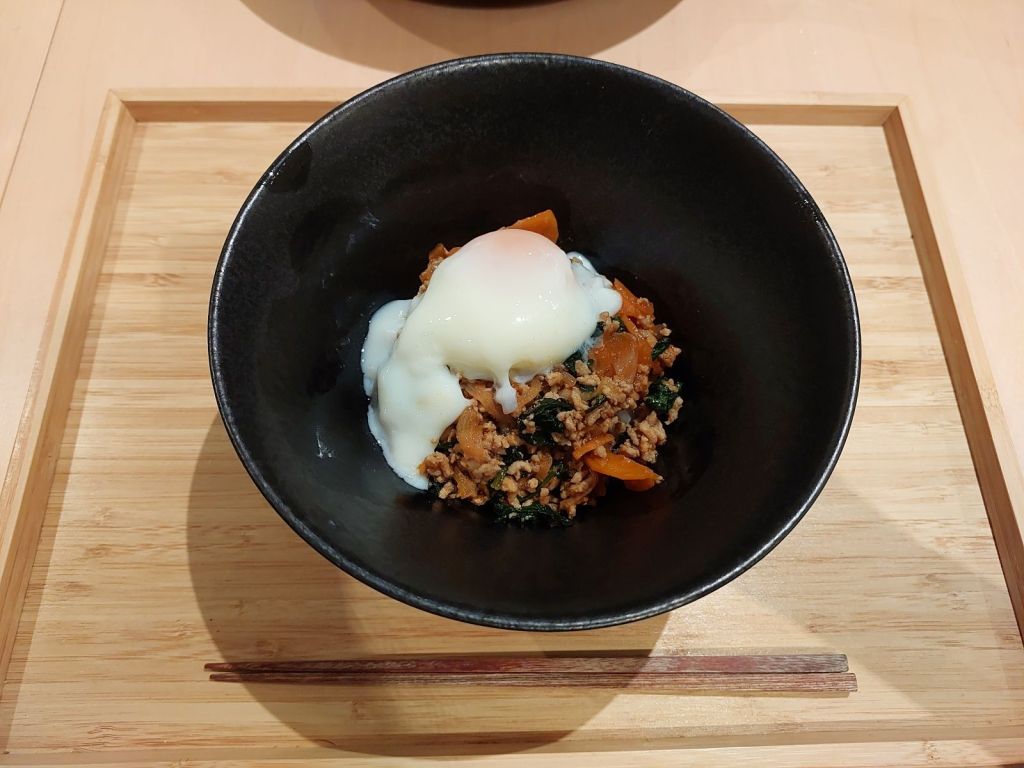
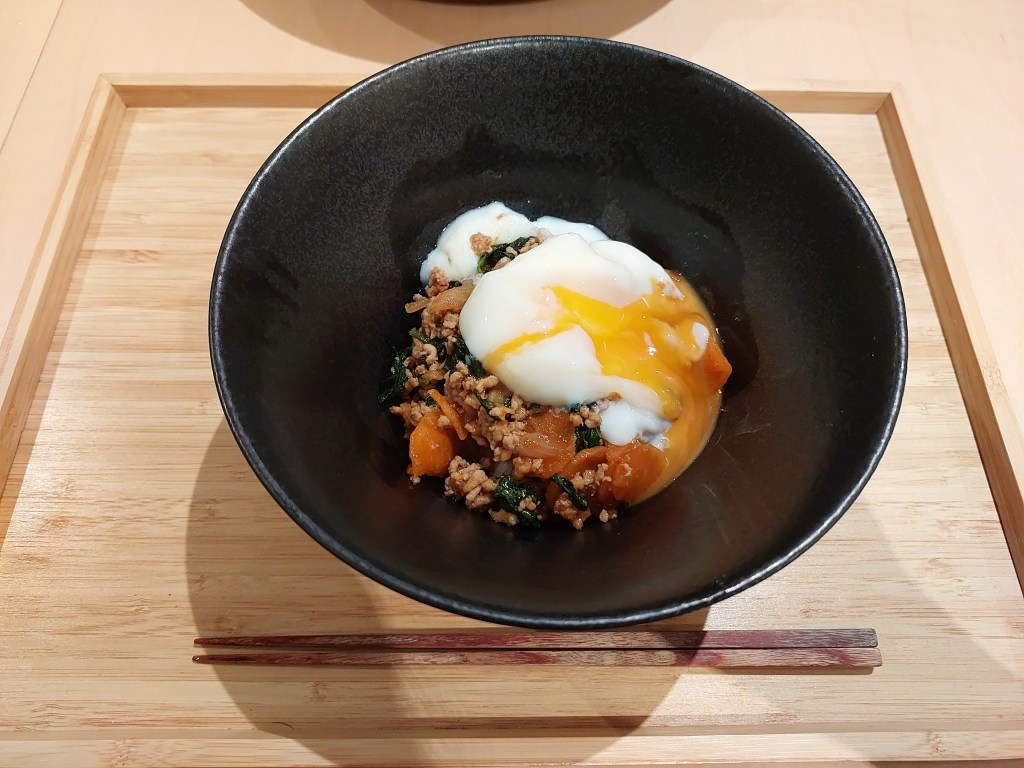
The default hotcook recipe for Onsen Tamago makes soft boiled eggs. This one makes silky hot spring eggs.
Ratatouille Pasta Sauce

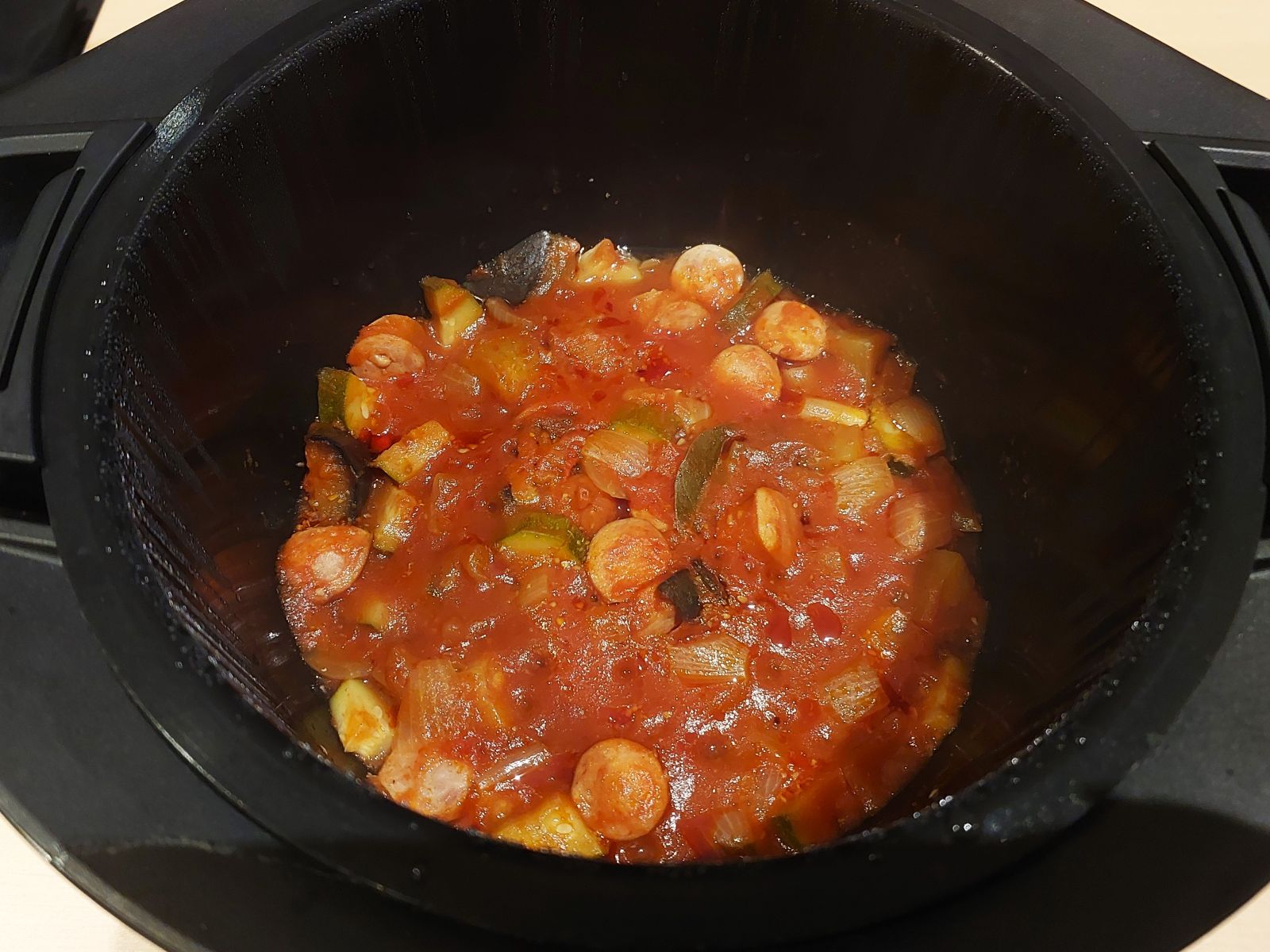
- Eggplant – 1/2 (250g), diced
- Onion – 1, diced
- Zucchini – 1, chopped
- Kransky sausage – 2, chopped
- Canned chopped tomatoes – 1 can (~400ml)
- Garlic – 1, choppped (or paste 1tsp)
- Olive oil – 1 tbsp
- Consomme – 2 tbsp
- Red wine – 2 tsbsp
- Bay leaves – 2
Pop everything in pot and cook with Ratatouille setting (40min). Serve on pasta.