


I’ve made a tubular skirt with a ruffle hem before, but this time I wanted to see what kind of volume I could get from a circular base. So I drafted a new pattern and did a little side‑by‑side comparison with the tubular version.
Finished skirt
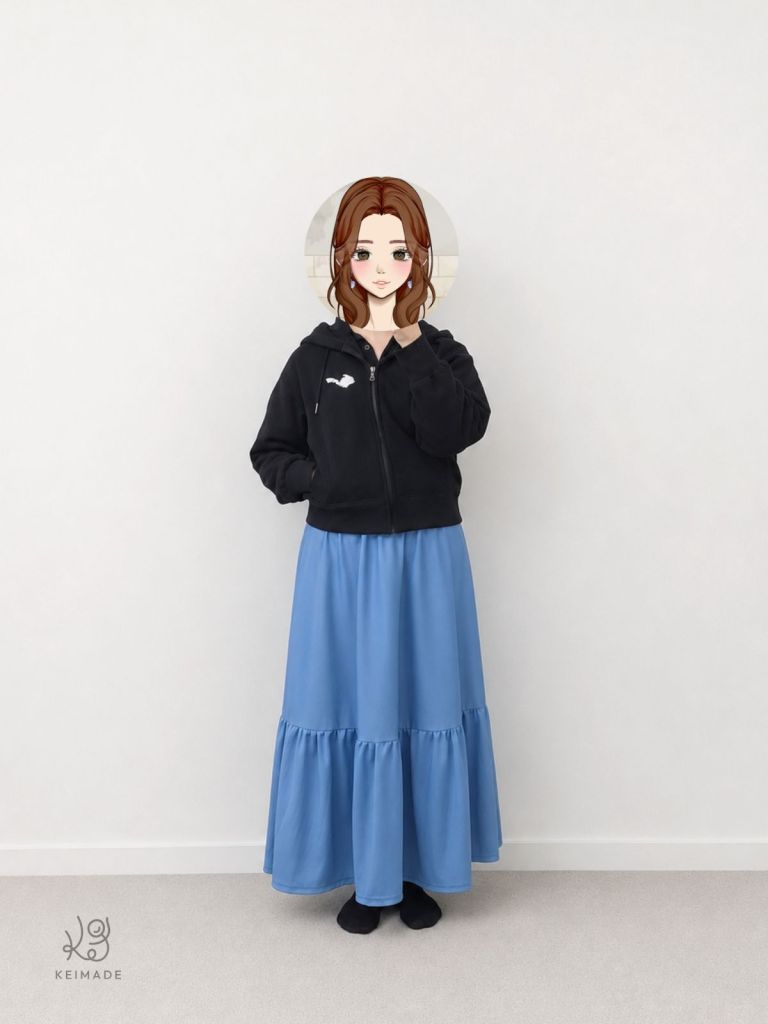
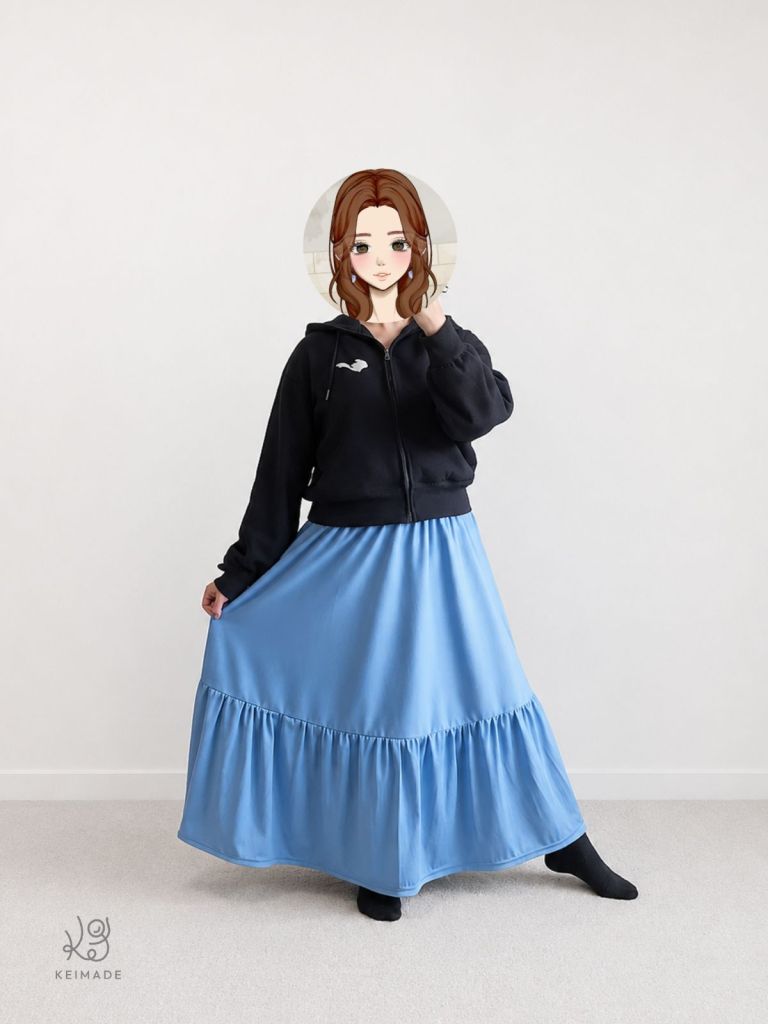
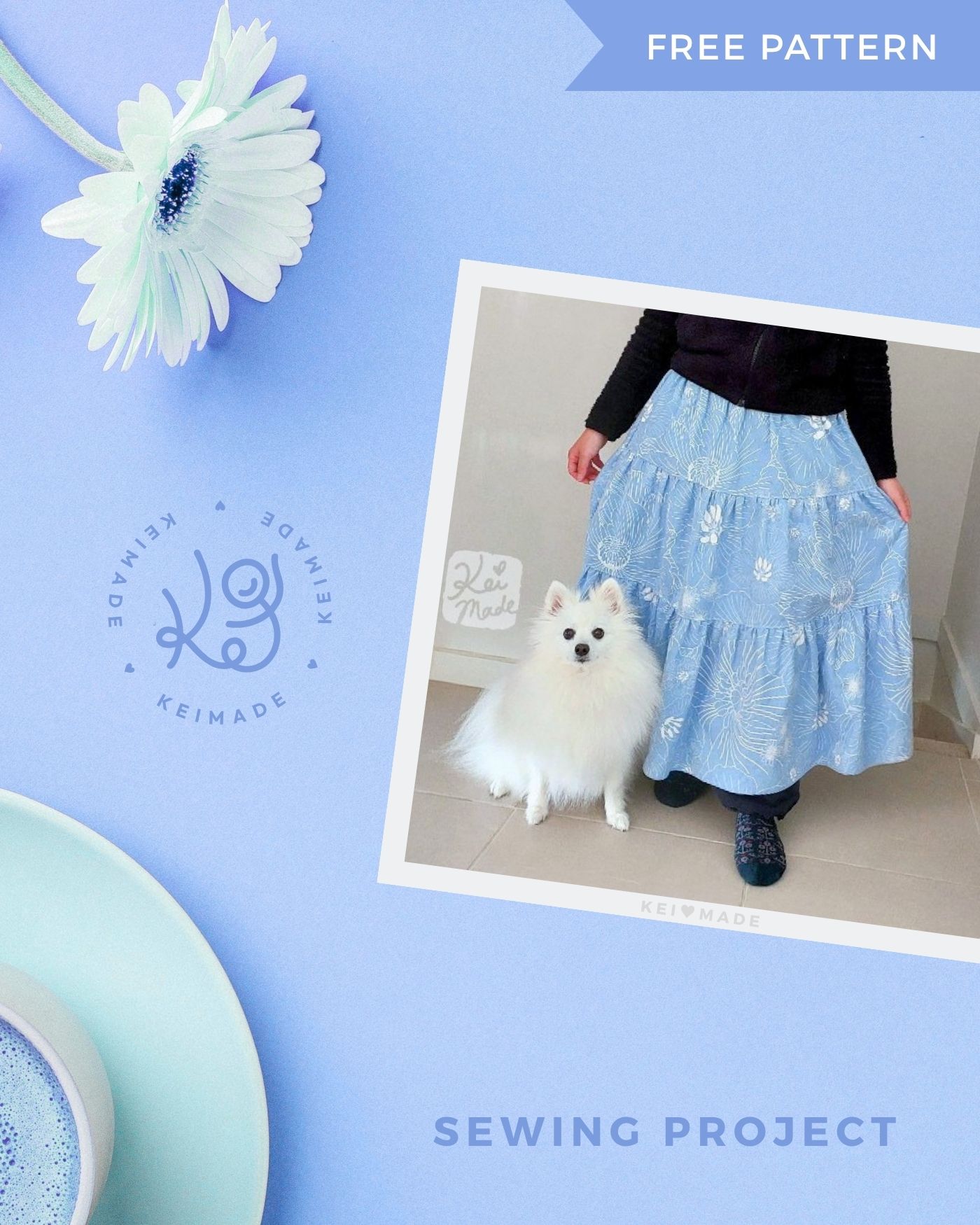
Here are photos of the completed skirt with a circular base and ruffle hem.
The pattern
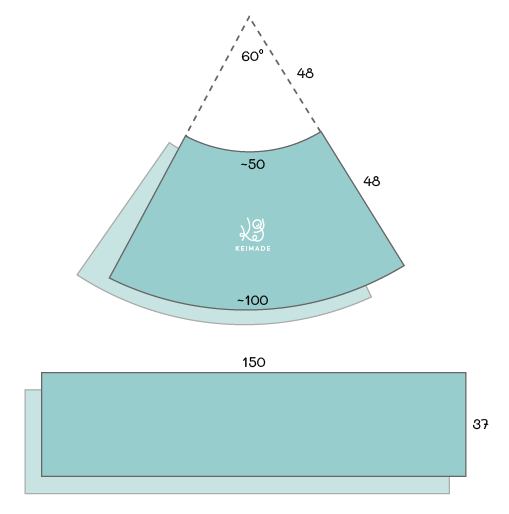
The waistband will be elastic, so the top of the skirt just needs to be wide enough to slip comfortably over the hips (+10cm).
I was aiming for a 150 cm frill on each side because my fabric was 150 cm wide. A half‑circle draft would’ve given me a 120 cm base, which only works out to about a 1.2× gather. Instead, I drafted a 120‑degree skirt to get roughly a 1.5× gather. (And it worked out great.)
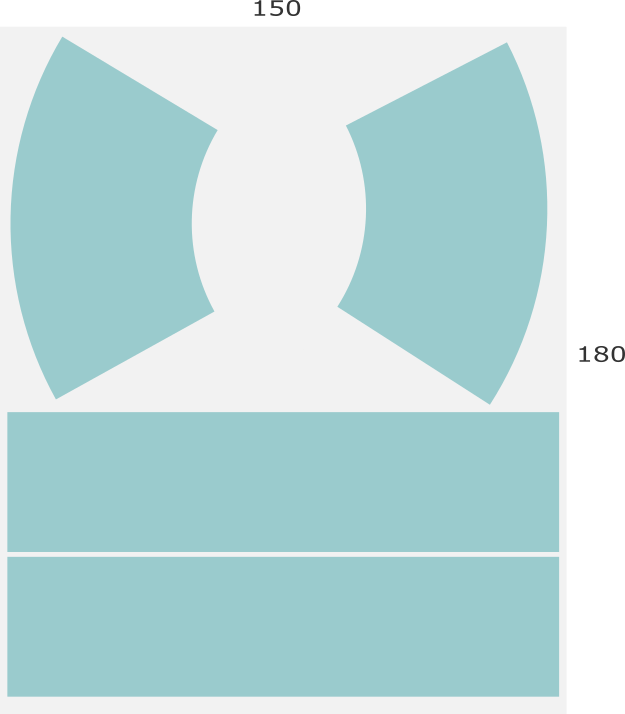
Using 150 cm‑wide fabric, this skirt took roughly 180 cm of length to make. (Pockets were cut from the gaps between the skirt panels.)
Steps overview
- Gather the hem tier — Gather the top edge of the hem rectangle down to 100 cm, so it matches the base of the circular skirt panel.
- Join the tiers — Sew the gathered hem tier to the circular skirt tier, right sides together.
- Sew side seams — Sew the side seams of the skirt; add pockets first if you’re including them.
- Attach the waistband — Sew on the waistband.
- Finish the hem — Hem the skirt to complete it.
For a step-by-step tutorial on how to make a tiered skirt, see my post:
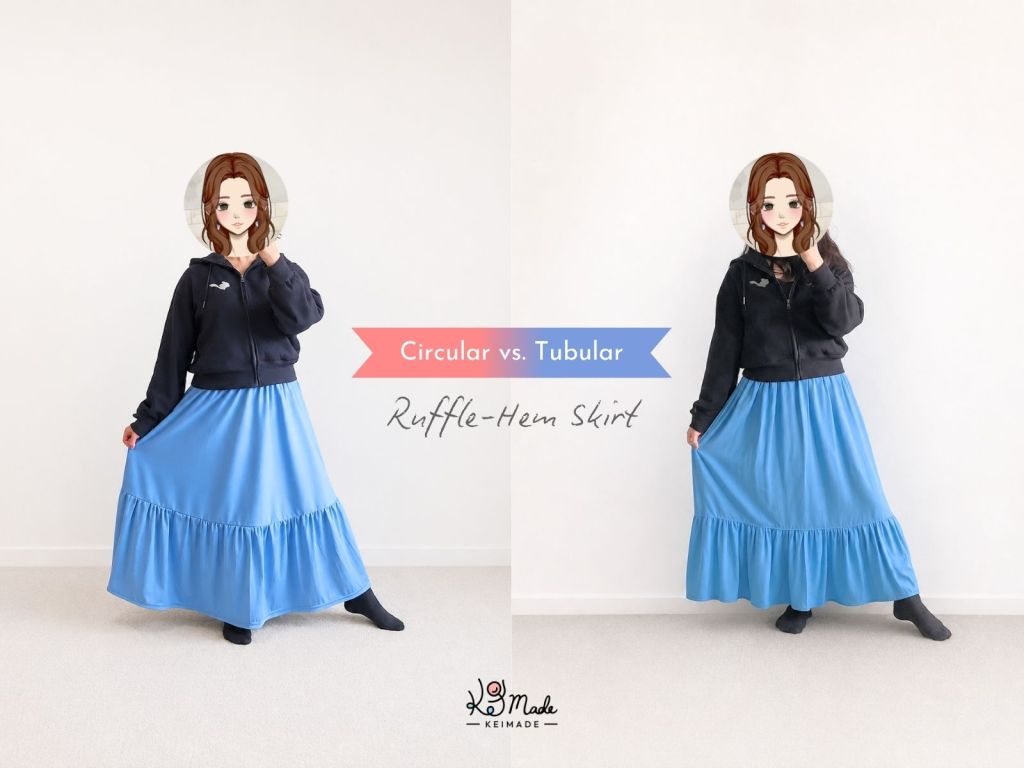
Circular vs Tubular: Ruffle Skirt Shape Comparison
Here’s a comparison showing the difference between using a circular top tier and a tubular top tier for the ruffle‑hem skirt.
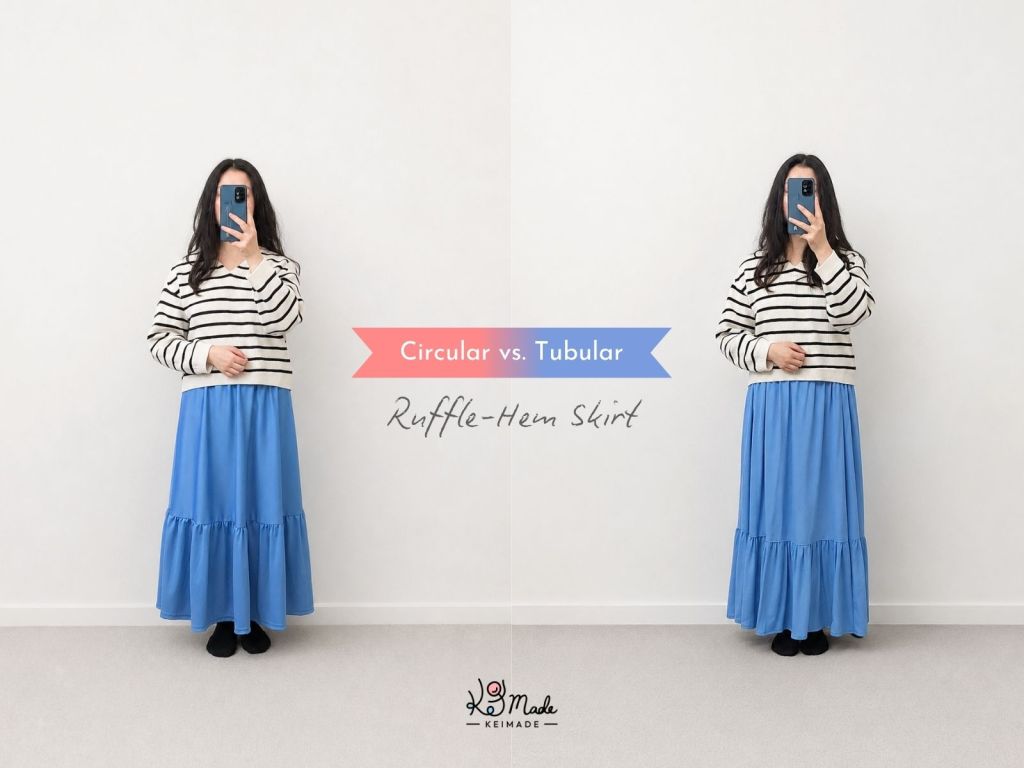
The circular skirt feels fuller, while the tubular version keeps the silhouette simpler.
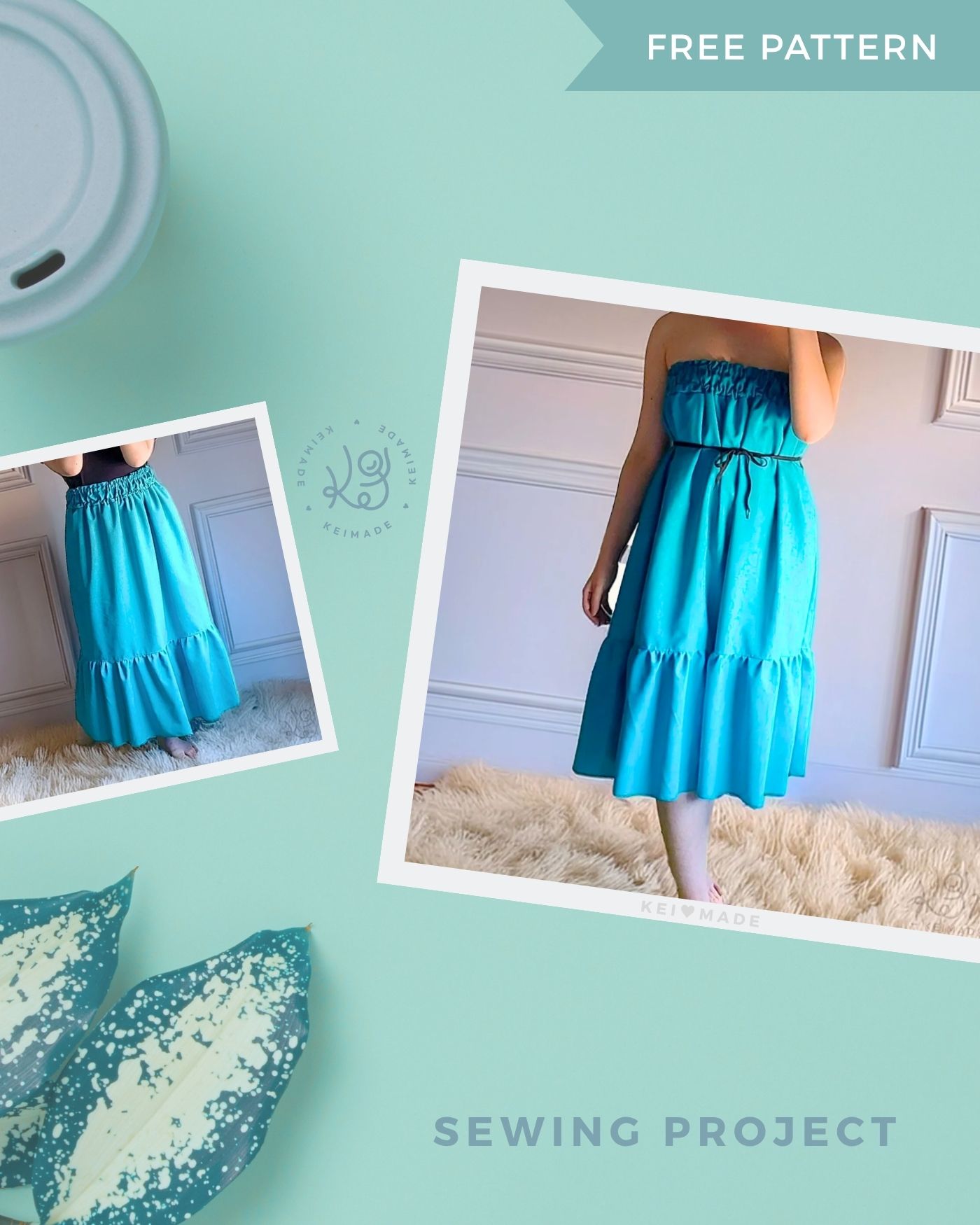
If you want to see the pattern for the tubular skirt, here it is:




Leave a Reply